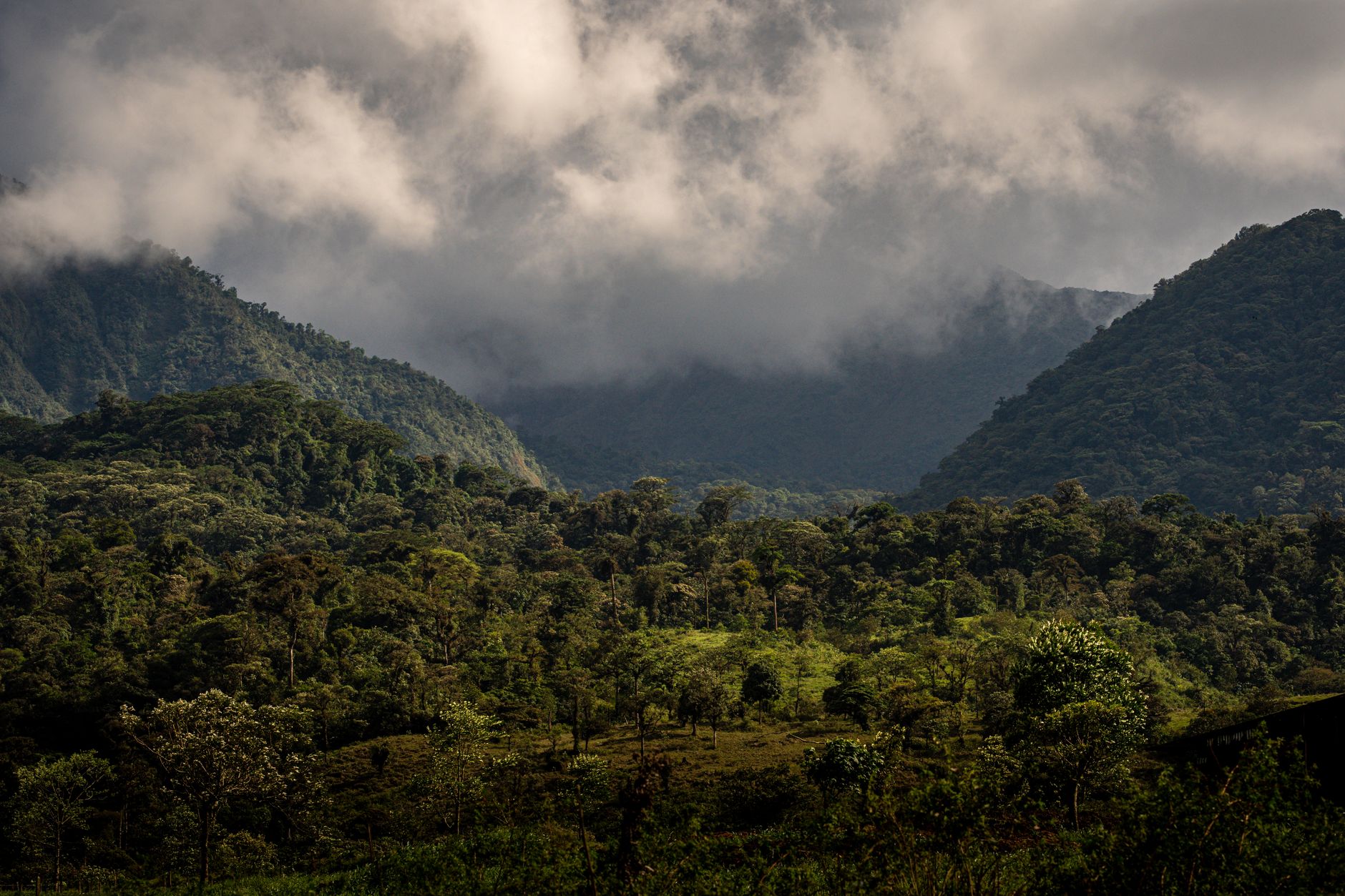
The Monteverde cloud forest is famous because its mist is not just weather. It is part of the forest’s water system. In Costa Rica’s Tilaran mountains, warm air rises, cools, and turns into low cloud that wets leaves, mosses, bark, roots, and soil. That steady moisture helps explain why a relatively small mountain forest can feel so biologically crowded, with plants growing on plants and animals shaped by a cool, wet world.
For someone searching this topic, the useful answer is simple: Monteverde is alive in such an intense way because mist gives the forest water even when rain is not falling. The cloud does not sit above the ecosystem like a backdrop. It touches it, feeds it, and changes how life grows there.
What makes the Monteverde cloud forest different from an ordinary rainforest
Most people imagine rainforests as hot lowland forests with heavy rain and tall, closed canopies. Monteverde is different. It is a tropical montane cloud forest, which means altitude matters as much as rainfall. The forest is high enough that passing air cools into fog and cloud, but still tropical enough to hold a dense web of orchids, ferns, insects, birds, amphibians, and mammals.
The official Monteverde Cloud Forest Preserve describes cloud forest formation as warm tropical air rising along mountain slopes, cooling into mist, and condensing on leaves, mosses, and roots through a process called horizontal precipitation. That phrase sounds technical, but the idea is easy to picture. The forest catches water sideways from cloud and fog, not only from rain falling straight down.
That changes the whole architecture of the place. Mosses can stay wet on branches. Ferns can root in pockets of damp organic matter high above the ground. Epiphytes, the plants that grow on other plants without taking their nutrients, turn tree trunks and limbs into stacked habitat. A cloud forest tree is not just a tree. It is a vertical neighborhood.
This is one reason cloud forests often feel denser than their size suggests. Life is layered on bark, in leaf litter, along stream edges, under bromeliad cups, and in the cool air between branches. The forest gains more surfaces for life to use because moisture keeps those surfaces workable.
Mist turns trees into water collectors
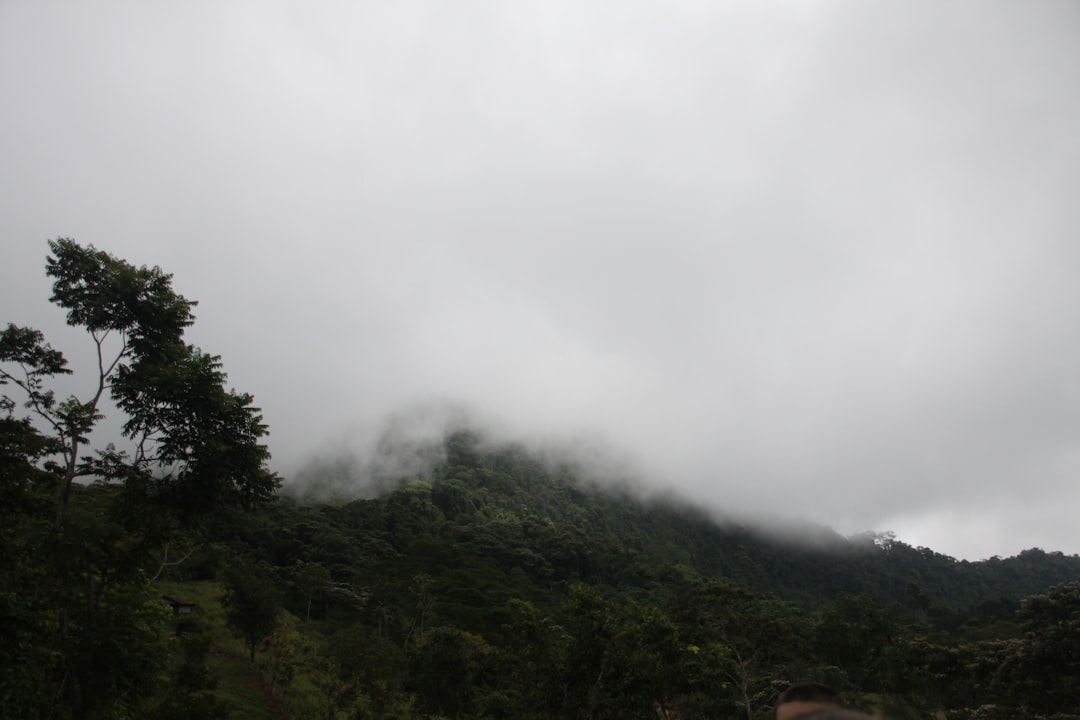
Mist does not behave like a dramatic storm. It works slowly. Tiny droplets collect on leaves, needles, moss, and hanging roots. As those droplets join together, they drip down through the canopy and into the soil. In a dry spell, that extra moisture can matter a lot.
Scientists studying tropical montane cloud forests describe them as ecosystems shaped by frequent fog, cool temperatures, high biodiversity, and many species found in narrow ranges. A review hosted by the U.S. National Library of Medicine notes that these forests are especially vulnerable because they depend on a rare microclimatic envelope, meaning a very specific combination of temperature, cloud, humidity, and elevation.
That dependency is what makes Monteverde so interesting and so fragile. If the cloud layer changes height, or if dry days become more common, the forest does not simply become a slightly drier version of itself. The water delivery system begins to shift. Species that rely on wet skin, moist eggs, damp bark, or fog-fed plants may feel the change first.
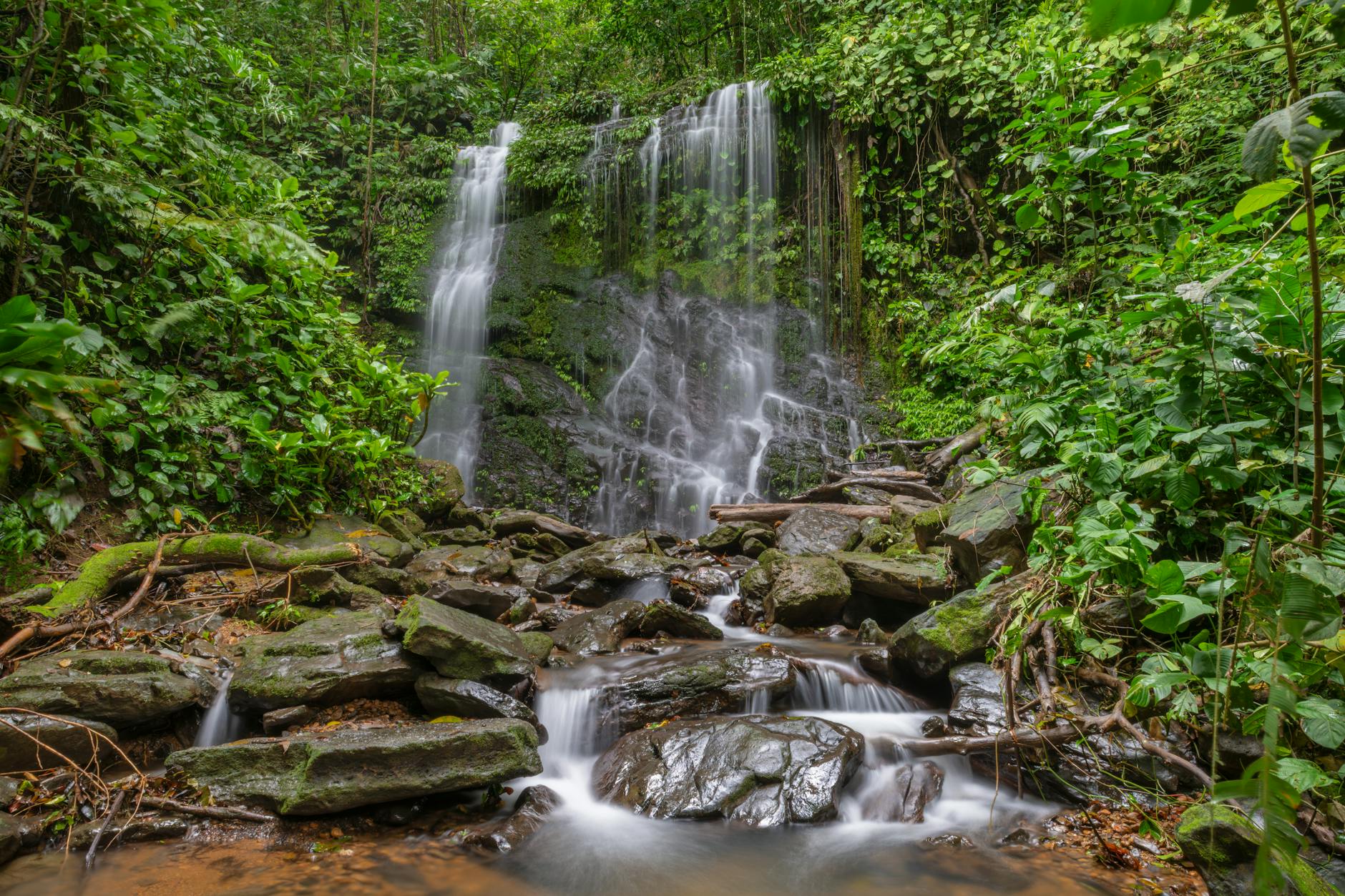
The mist also helps explain the forest’s slower, stranger textures. Leaves often carry beads of water. Trunks wear thick coats of moss. Fallen branches rot into sponge-like matter rather than drying quickly. Nutrients move through fungi, insects, roots, and decomposing plant material in a cool, wet cycle that is easy to miss if you only look for large animals.
Why so many species fit into a cloudy mountain forest
Cloud forests can hold a surprising amount of biodiversity because they create many small habitats over short distances. A slope facing the wind can be wetter than a nearby sheltered slope. A ridge can catch mist while a lower valley receives more stream runoff. A single tree can host mosses, orchids, bromeliads, insects, frogs, spiders, and birds at different heights.
Monteverde is especially well known for birds such as the resplendent quetzal, but the quieter life may tell the deeper story. Amphibians, insects, fungi, epiphytes, and soil organisms all respond to moisture in precise ways. When the air stays damp, a frog does not have to travel far to avoid drying out. When bark stays wet, small plants can survive where they would otherwise fail.
That is why the word “alive” fits Monteverde better than it does many famous views. The forest is not impressive only because it looks green. It is alive because its physical conditions keep opening tiny opportunities. A wet branch becomes a garden. A bromeliad becomes a water cup. A moss mat becomes shelter. A drip line becomes a path for nutrients.
There is a clear connection here to broader rainforest biodiversity. In the Amazon, in Central American cloud forests, and in other tropical systems, conservation often comes down to protecting the conditions that allow small forms of life to keep doing their work. Big animals may make people care first. The small lives keep the forest functioning.
What Monteverde teaches us about climate sensitivity
Monteverde is also a warning. Cloud forests are tied to elevation, temperature, wind, and moisture. Move one of those pieces and the forest can change quickly. The concern is not only that trees might warm by a degree or two. The concern is that the clouds themselves may form higher, arrive less often, or fail to wet the forest in the same reliable way.
The story of the Monteverde golden toad is often told in this context. The species was last seen in 1989, and researchers have examined how climate variability, unusually dry conditions, disease, and regional changes may have contributed to its disappearance. A PNAS paper available through PubMed Central discusses the golden toad’s demise in relation to tropical cloud forest climate variability and notes concern about rising cloud base height and drier conditions around Monteverde.
That does not mean every species decline has one neat cause. Forests rarely work that way. But the golden toad remains a hard lesson because it shows how narrow the safety margin can be for species adapted to cool, wet mountain systems. If a creature is built around mist, then mist is not decoration. It is habitat.
The same logic applies far beyond Costa Rica. In the Peruvian Amazon, where Fund The Planet focuses its protection work, the forest is not a cloud forest, but it is still a water-shaped ecosystem. Rivers, rainfall, forest cover, and humidity are tied together. Protecting rainforest land helps protect the living systems that regulate water, store carbon, and make biodiversity possible. The connection between forest protection and climate stability is explained further in our guide to rainforest carbon storage vs planting new trees.
Why protection has to focus on whole systems, not just famous species
Monteverde makes a good tourism magnet because people know the name, but its bigger lesson is not about travel. It is about ecological relationships. A cloud forest is not protected by saving one bird, one frog, or one scenic viewpoint. It needs intact slopes, connected habitat, clean water, stable moisture, and enough surrounding forest to soften the shocks coming from climate and land use change.
That is also why serious rainforest conservation has to be more concrete than admiration. Forests need legal protection, monitoring, local cooperation, and long term funding that keeps land from being cleared when pressure rises. Fund The Planet’s model is built around direct rainforest protection in the Peruvian Amazon, where members help fund protected areas that can be tracked digitally rather than treated as vague promises.
The point is not that the Amazon and Monteverde are the same ecosystem. They are not. The point is that both teach the same conservation habit: protect the living process, not just the beautiful result. In Monteverde, that process is mist catching on moss and dripping through a mountain forest. In the Amazon, it is a vast lowland forest moving water, carbon, nutrients, seeds, and animal life across huge distances.
Mist makes Monteverde feel almost impossible, but the mechanism is practical. Water touches more surfaces. More surfaces hold life. More life creates more relationships. When we protect forests well, we are protecting those relationships before they become visible enough to miss.