If you searched for leafcutter ants, you are probably looking for the insects that carry green scraps like little sails through the rainforest. The short version is even better: they are not eating most of those leaves. They are hauling them home to feed a fungus garden, which is the colony’s real food source. That makes leafcutter ants some of the most successful farmers in the Amazon and a surprisingly useful way to understand why rainforest biodiversity is worth protecting.
A leafcutter trail can look messy at first. Look closer and it becomes a logistics network. Tiny workers cut fresh plant material, larger workers carry it, smaller ants patrol the cargo, and workers inside the nest prepare the leaves for the fungus. The colony works because thousands or millions of insects follow simple tasks that add up to something organized.
What leafcutter ants actually farm
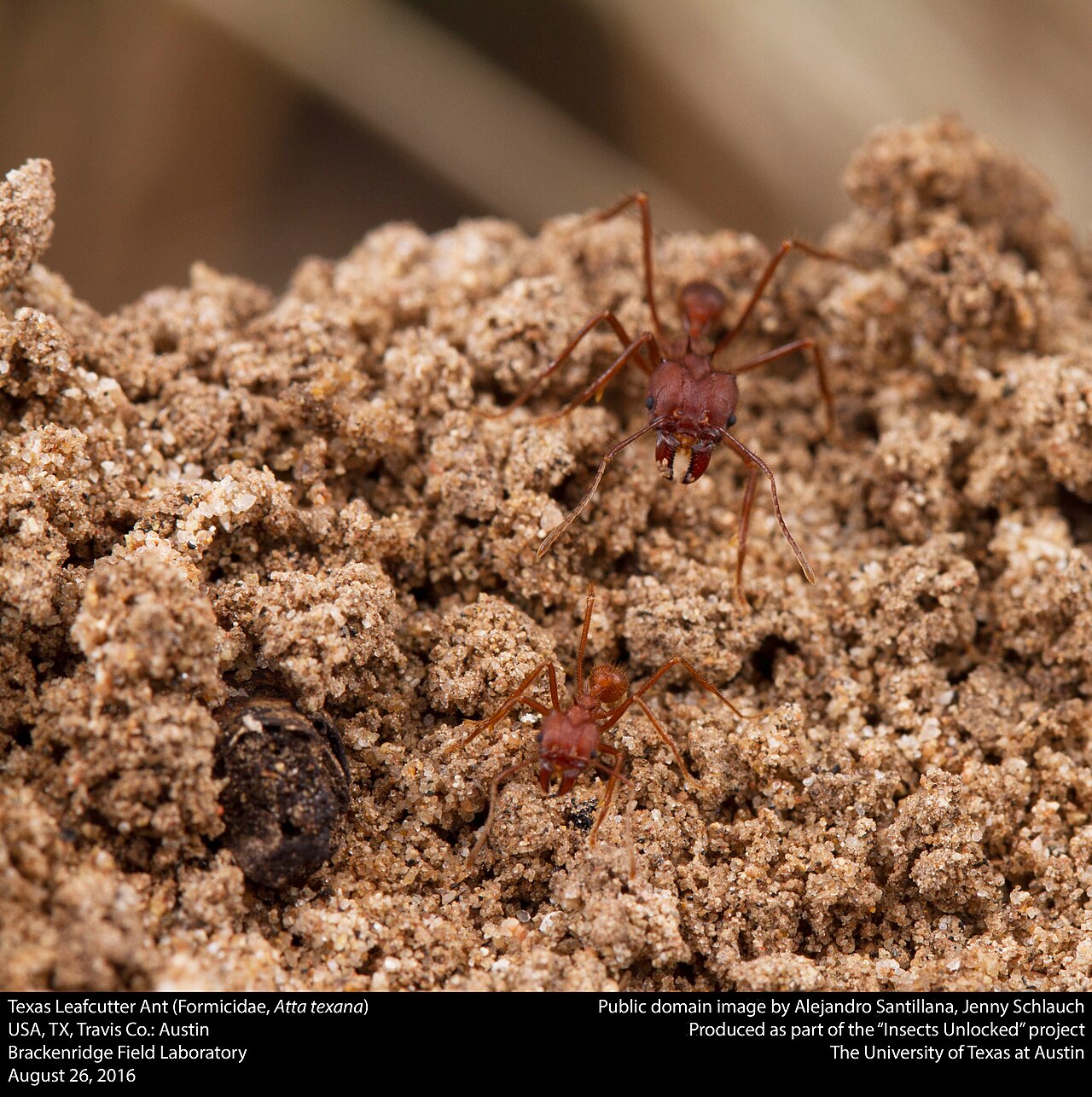
Leafcutter ants belong mainly to the genera Atta and Acromyrmex. They are famous for slicing pieces from leaves, flowers, and other plant material, but the leaf fragments are raw material rather than lunch. The ants chew and process them, place them in underground chambers, and use them as compost for a specialized fungus. Britannica’s overview of leafcutter ants describes this relationship clearly: the ants cultivate fungus gardens and depend on them for food.
That farming system is old. Fungus-growing ants have been studied as one of nature’s major examples of agriculture outside humans, and research on fungus-growing ant evolution traces a long history of ant, fungus, and microbial relationships. The details vary by ant group, but the basic idea is wonderfully strange. The colony harvests plants, the fungus breaks that material down, and the ants feed from the cultivated fungal crop.
This does not mean every ant in the nest does the same job. Leafcutter colonies divide work by size, age, and task. Some ants cut. Some carry. Some clean. Some tend the fungus gardens. Some defend the colony from intruders. A mature Atta colony can be enormous, and it only works because each small action fits into the colony’s bigger rhythm.
For a rainforest reader, this is the first useful lesson: biodiversity is not a list of pretty animals. It is a set of relationships. Leaves, fungi, bacteria, soil, ants, birds, mammals, and microbes are tied together in ways that are often invisible until one piece disappears.

Why their colonies matter to rainforest life
Leafcutter ants are sometimes described as pests because they can strip leaves from crops, gardens, and young trees. That reputation is not wrong in farms or plantations. In a rainforest, though, the story is more complicated. These ants move huge amounts of plant material and soil. Their nests change the ground around them. Their abandoned chambers can affect nutrients, drainage, and the patchy structure of the forest floor.
Their work also creates opportunities for other species. A nest is not just an ant city. It can become a small zone of disturbed soil, fungal activity, predators, scavengers, and opportunistic plants. When people talk about the Amazon as biodiverse, this is the kind of detail that often gets missed. Biodiversity is not only jaguars, macaws, and giant trees. It is also the busy systems underfoot.
There is a nice tension here. Leafcutter ants remove leaves, but they are not simply destroying forest. In a healthy forest, leaf growth, herbivory, decay, and regrowth happen together. The ants are part of that cycling. They clip vegetation, feed their fungus, and help move nutrients through the ecosystem in a way that makes sense only inside a functioning forest.
That is why a tiny animal can make a large conservation point. If you want to understand what lives in a small patch of rainforest, start at ground level. Fund The Planet has already explored this idea in what exactly lives in 1 square meter of the rainforest, and leafcutter ants are a perfect example. One square meter is not empty space. It can be a crossing route, a feeding site, a nursery edge, or a hidden part of a colony’s working territory.
The hidden science inside a fungus garden
The most fascinating part of leafcutter ants is not the leaf cutting. It is hygiene. A fungus garden is valuable, and anything valuable attracts trouble. Competitor fungi, pathogens, parasites, and waste can threaten the colony’s food supply. So the ants groom the garden, remove contaminated material, and maintain conditions that help their crop survive.
Scientists have also studied the wider microbial world around these ant gardens. Some fungus-growing ants are associated with bacteria that can help suppress harmful microbes, and research published in Nature Communications shows how complex these ant-associated systems can be. The main point for a general reader is simple: the nest is not only ants plus fungus. It is a living system with multiple partners and pressures.
That should make us a little more humble about rainforest protection. A forest is not protected only when the trees remain standing on a map. It is protected when the conditions that let these relationships continue are kept intact: soil moisture, canopy cover, plant diversity, old wood, leaf litter, and the quiet continuity that species need to keep doing their work.
This is also where the Amazon becomes more than a backdrop. In regions like the Peruvian Amazon and Ucayali, rainforest protection matters because connected habitat keeps ecological relationships connected too. Fund The Planet’s work is focused on securing rainforest land for long-term protection, and its Ucayali context explains why the region’s biodiversity, water systems, and forest continuity matter.
What leafcutter ants teach us about rainforest protection
Leafcutter ants make one thing obvious: the rainforest is built from interactions, not isolated parts. Protecting a jaguar without protecting its forest makes no sense. Protecting a tree without protecting the soil community below it is also incomplete. The same logic applies to ants, fungi, and the countless small organisms that never become poster animals but still help the forest function.
Habitat loss breaks these interactions in quiet ways. A cleared patch does not just remove trees. It changes light, heat, humidity, soil structure, and plant regrowth. Trails and forest edges can dry out the ground. Fragmentation can separate colonies, food sources, and the species that depend on the same microhabitats. Some generalist species may adapt, but many relationships become thinner and less reliable.
That is why rainforest conservation has to be about land, continuity, and proof. Fund The Planet’s model focuses on purchasing endangered rainforest land, legally securing it, and making protected areas visible through digital tracking. The point is not symbolic nature appreciation. It is direct protection of real rainforest, with members able to see the area tied to their contribution through the Rainforest Explorer.
For readers who want the practical side of that protection model, how rainforest protection works legally explains the basic idea in plain language. It matters because conservation only becomes durable when the legal and operational details are taken seriously.

Leafcutter ants are easy to love because they look almost comic: a line of moving green triangles, each one powered by a tiny body underneath. But their real value is what they reveal. A rainforest is not one grand thing. It is millions of small agreements between species, repeated every day.
Protecting that world means protecting the space where those agreements can continue. The ant carrying a leaf is not just a charming rainforest image. It is a reminder that the forest’s most important work often happens at ankle height, one fragment at a time.