The Amazon Basin is the part of South America drained by the Amazon River and its more than 1,100 tributaries. Covering roughly 7 million square kilometers, it represents about 35 percent of the South American continent. The basin spreads across eight countries plus French Guiana: Brazil holds the largest share at roughly 67 percent, followed by Peru at 14 percent, Bolivia at 10 percent, and Colombia, Ecuador, Venezuela, Guyana, and Suriname dividing the remainder.
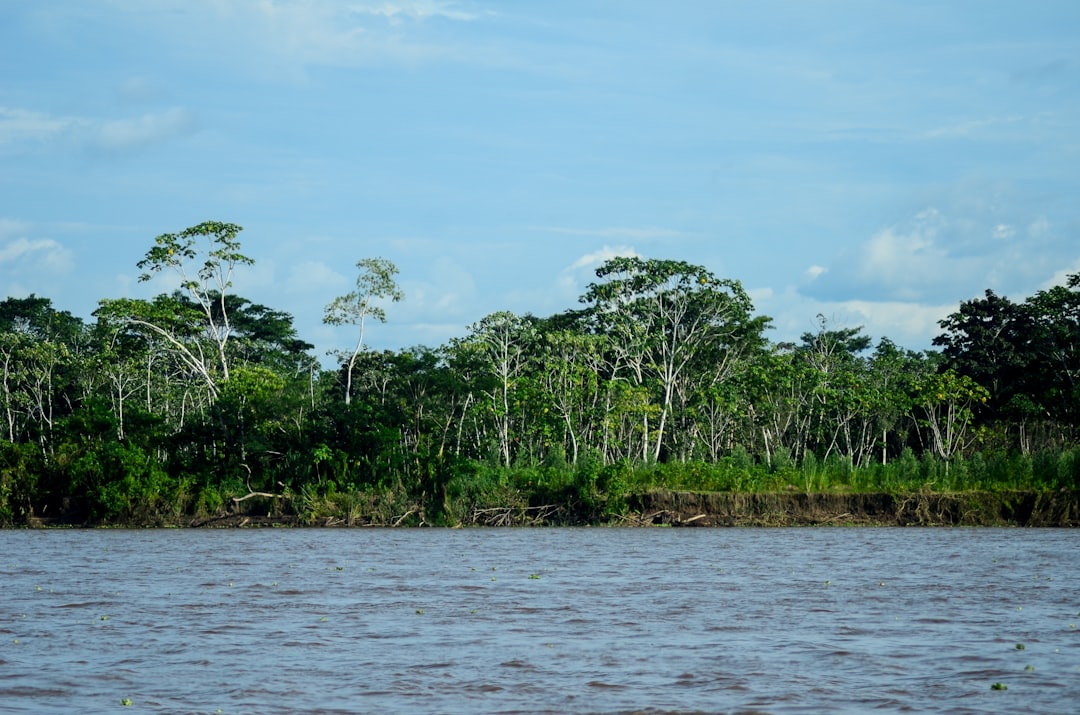
The river itself is the basin’s defining feature. The Amazon discharges roughly 20 percent of all river water that enters the world’s oceans. Its flow is so powerful that freshwater from the Amazon is detectable more than 100 kilometers out into the Atlantic. During the wet season, the river rises dramatically, flooding adjacent forests by several meters and turning the basin into a vast interconnected water world where fish swim between tree trunks and boats become the only way to travel.
Geologically, the basin has a dramatic history. It once flowed westward toward the Pacific Ocean, before the uplift of the Andes mountain range blocked that path and redirected the entire system eastward. The basin today is largely flat lowland, with the Andes forming a high-altitude wall along its western edge. The combination of Andean snowmelt, equatorial rainfall, and an almost perfectly flat floodplain created the conditions for the richest freshwater system on Earth.
Why the Amazon Basin matters
The Amazon Basin matters because it holds systems that the rest of the planet depends on. Start with the forest. Within the basin lies the largest rainforest on Earth, roughly 6 million square kilometers of dense tropical vegetation. That forest stores an estimated 150 to 200 billion tons of carbon in its trees and soils. When the forest is intact, that carbon stays locked away. When it is burned or cleared, it enters the atmosphere, accelerating climate change.
The biodiversity within the basin is unmatched anywhere on the planet. Scientists estimate that one in ten known species on Earth lives in the Amazon. The numbers are staggering: over 40,000 plant species, roughly 1,500 bird species, more than 1,400 mammal species, and approximately 2,500 described fish species, with perhaps another thousand still undescribed. The butterfly diversity alone is astonishing. A single protected area, Tambopata National Reserve in Peru, hosts more than 1,200 butterfly species in just 5,500 hectares. All of Europe has about 320.
The Amazon Basin also functions as a continental climate engine. The forest releases enormous volumes of water vapor into the atmosphere through transpiration, creating what scientists call flying rivers. These airborne waterways carry moisture thousands of kilometers south and east, delivering the rainfall that sustains agriculture across Brazil, Paraguay, and northern Argentina. Without the Amazon forest, the rain patterns that feed much of South America’s food production would collapse.
Then there are the people. Roughly 47 million people live within the Amazon Basin, including more than 2.2 million Indigenous people representing over 500 distinct ethnic groups. For these communities, the basin is not an abstraction. It is food, water, medicine, transport, and cultural identity. Their knowledge of the forest, its species, and its seasonal rhythms represents an irreplaceable form of ecological understanding that has been built over millennia.

What threatens the basin
The Amazon Basin is under pressure from multiple overlapping forces. Deforestation is the most visible. Roughly 17 percent of the original Amazon forest has already been cleared, mostly for cattle ranching and soy farming. In the Brazilian Amazon, cattle pastures occupy about 80 percent of deforested land. Road construction opens previously inaccessible areas to settlers, loggers, and land speculators, who can increase land value tenfold simply by clearing the trees.
Infrastructure development adds another layer of risk. Hydropower dams, built to generate electricity for growing populations, disrupt the river connectivity that fish, dolphins, and local fisheries depend on. Mining, both legal and illegal, introduces mercury into waterways and food chains. Mercury contamination from artisanal gold mining has become a serious human health crisis in parts of Peru, Colombia, and Brazil.
Scientists warn of a tipping point. If deforestation in the Amazon reaches 20 to 25 percent of the original forest cover, the system may no longer be able to generate enough rainfall to sustain itself. Parts of the southern and eastern Amazon are already showing signs of drying, with longer dry seasons and more frequent wildfires. The concern is not that the forest will vanish overnight but that it will gradually convert to a drier savanna-like ecosystem, releasing billions of tons of carbon in the process and permanently altering the climate of South America.
What protection looks like
Protecting a system as large and complex as the Amazon Basin requires action at every scale. At the international level, agreements like the Soy Moratorium, a voluntary industry commitment to stop buying soy grown on recently deforested Amazon land, have demonstrably slowed forest loss. Protected areas and Indigenous territories now cover significant portions of the basin, and studies consistently show that deforestation rates inside these zones are far lower than outside them.
On the ground, direct land protection is one of the most effective tools available. When rainforest is purchased, legally secured, and actively patrolled, the forest remains standing. In the Peruvian Amazon, conservation projects work with local communities to mark boundaries, monitor wildlife, and deter illegal encroachment. In places like the Ucayali region, protected reserves serve as strongholds for species ranging from jaguars to harpy eagles, while also safeguarding the watersheds that local communities depend on.
Fund The Planet operates in this part of the basin, purchasing endangered rainforest land in the Peruvian Amazon and securing it for long-term protection. Members can track their protected areas through the Rainforest Explorer, turning a basin-wide problem into something visible and personal. The Ucayali region, where FTP focuses its work, sits along the western edge of the basin where the Andes meet the lowland forest, an area of especially high biodiversity and conservation urgency.

The challenge of the Amazon Basin is that its fate is tied to decisions made thousands of kilometers away. Demand for beef in Shanghai, soy in Rotterdam, and timber in Los Angeles ripples through the basin’s economy and shapes how land is used. Addressing those pressures honestly, while also supporting the protected areas and Indigenous stewardship models that demonstrably work, is the path forward.
The Amazon Basin is not a wilderness separate from human concerns. It is a living system that produces rain, stores carbon, houses species, and sustains millions of people. Its protection is not a regional problem or a single-country responsibility. It is one of the clearest tests of whether the modern global economy can coexist with the natural systems that make life on Earth possible.