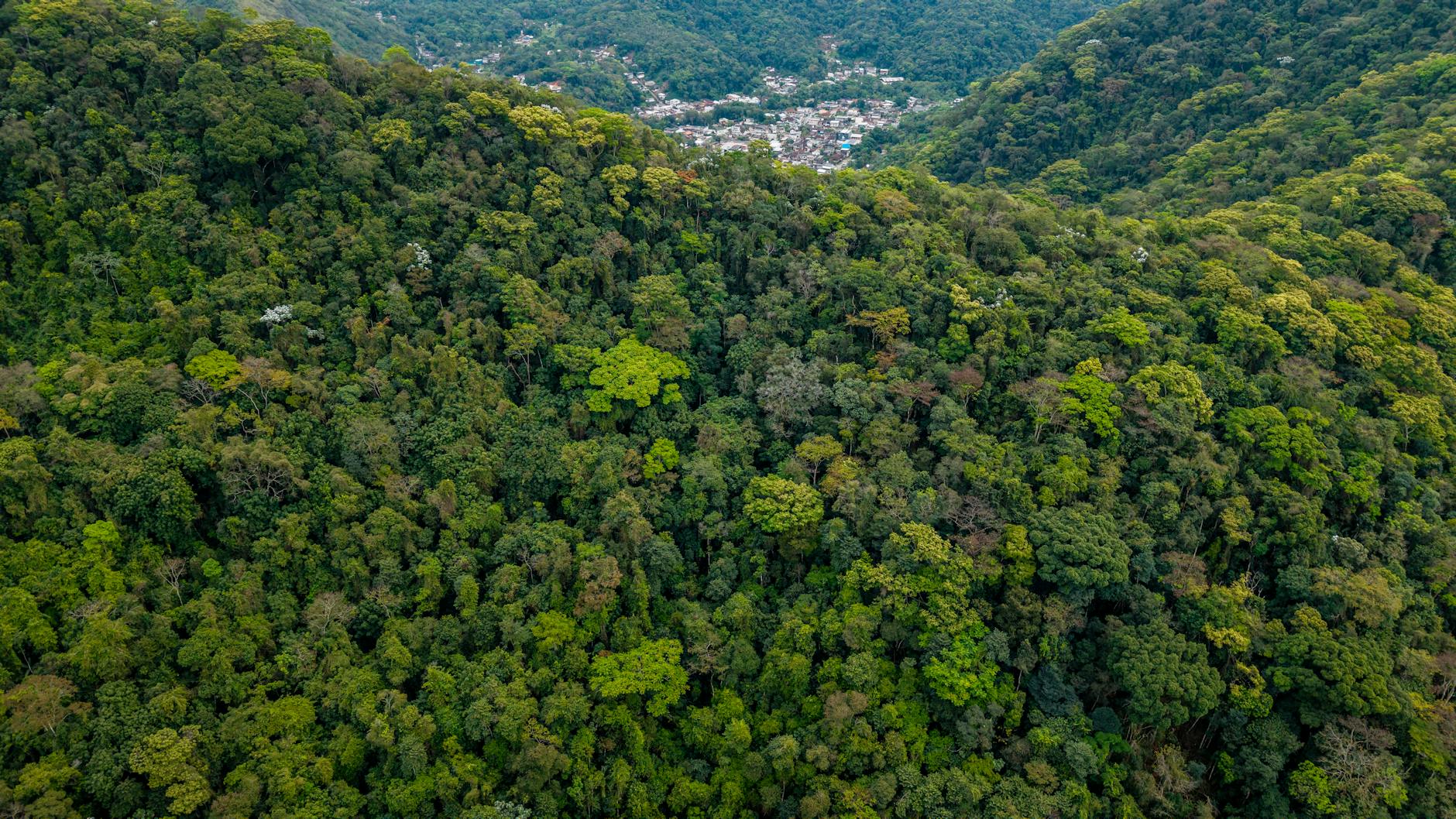
These forests hum with an unseen power: the ability to lock away billions of tons of carbon, keeping it out of the atmosphere. It’s a quiet process, one that has sustained the planet’s balance for millennia. But what happens when these ancient guardians are replaced by saplings?
Rainforest carbon storage is not just about trees; it’s about ecosystems matured over centuries. Each layer of the forest:from the sprawling roots to the sunlit canopy:plays a role in this intricate system, storing carbon with unmatched efficiency. While planting new trees captures public imagination as a climate solution, it raises a vital question: can any patch of new growth ever rival the carbon sink of an untouched rainforest? Understanding this difference reveals why preserving mature forests may be one of our most powerful tools against climate change.
How Tropical Rainforests Store Carbon

Photo by David Clode
In the dense, humid labyrinth of a tropical rainforest, a silent process unfolds every second: an intricate exchange of carbon dioxide between the atmosphere and every leaf, trunk, and root. These forests house some of the most efficient carbon storage systems on the planet. Photosynthesis is the starting point, as trees absorb carbon dioxide and store it in their biomass:trunks, branches, and leaves:while releasing oxygen back into the air. Yet their capacity for sequestration goes far beyond individual trees.
Ancient forests are unparalleled in their ability to store carbon, thanks to their biodiversity. A single hectare of tropical rainforest can host hundreds of tree species, each contributing to the ecosystem’s resilience and stability against environmental changes. This biodiversity ensures optimal resource use, with towering canopy giants capturing sunlight while shaded understory species maximize what little light filters through. Diverse species support one another in ever-changing patterns, creating a web of life that enhances their collective efficiency as a tropical rainforest carbon sink.
Compared to other ecosystems, tropical rainforests excel at carbon capture due to their climate and growth conditions. Year-round warmth and high humidity stimulate photosynthesis and biomass accumulation. Boreal forests, by contrast, store more carbon in their cold soils but grow far more slowly due to shorter growing seasons. The extraordinary activity of tropical rainforests showcases why they are irreplaceable when considering global climate strategies. Learn more about the unique climate role of Amazon rainforests.
Multi-Layer Carbon Storage in Rainforests
Every layer of a rainforest contributes to carbon absorption in trees and beyond. Above ground, towering trunks act as massive carbon repositories, while below ground, an intricate system of roots stabilizes soil carbon and prevents erosion. The soil itself, rich in organic material, holds centuries’ worth of decomposed plant matter. This underground carbon store often holds as much or even more carbon than the visible forest canopy.
The canopy plays a critical role in maximizing rainforests’ carbon capture potential. Giant, mature trees such as Brazil nuts or mahoganies occupy the uppermost layers, commanding the greatest access to sunlight. Mature trees also act as “carbon brokers,” pulling in vast amounts of CO₂ from the air. Beneath this, saplings and smaller species form a middle tier, ensuring no ray of sunlight is wasted. Finally, the understory vegetation:ferns, shrubs, and mosses:balances the cycle by taking nutrients from fallen organic material.
What distinguishes rainforests is their stability: when undisturbed, these ecosystems store carbon over centuries. A mature tree may lock carbon in its biomass for hundreds of years, continuing even in death as fallen logs slowly decompose into soil. Contrast this with fresh growth forests, where instability and environmental risks can easily release carbon back into the atmosphere. A rainforest represents not just a carbon-sequestering powerhouse but a long-term guarantee. Explore endangered rainforest ecosystems such as the Congo Basin.
New Tree Planting: Potential and Limitations
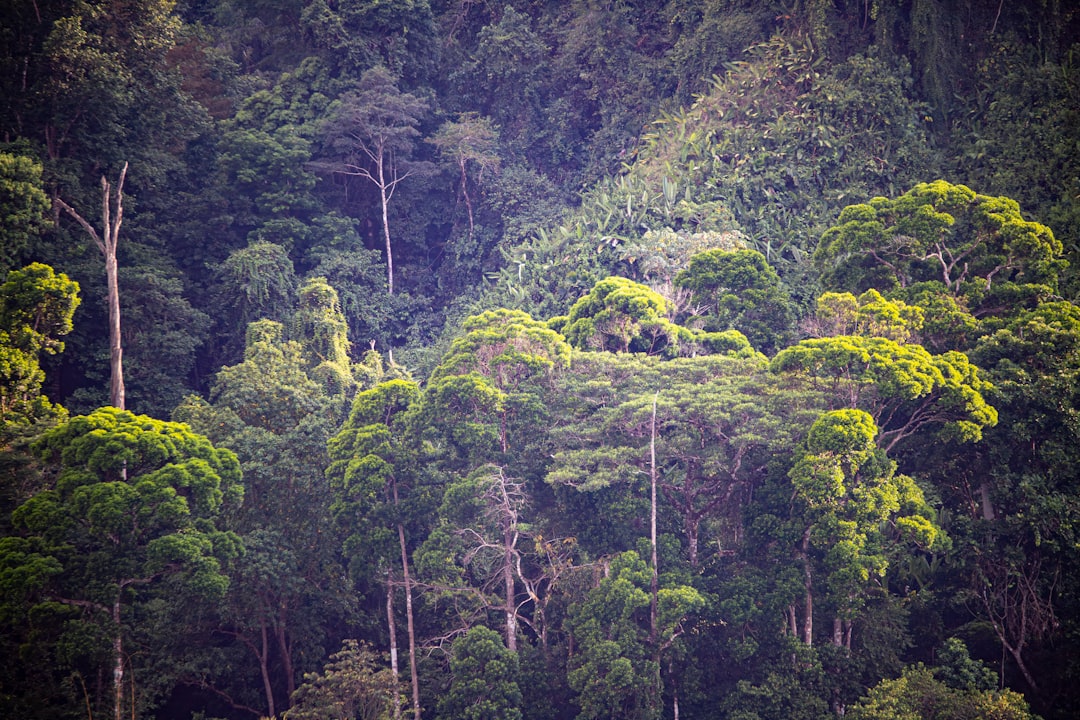
Photo by Bernd 📷 Dittrich
There’s undeniable allure in reforestation: the thought of planting saplings today to offset emissions tomorrow. Young trees absorb carbon dioxide enthusiastically during their growth periods. Over the course of their first decade, their carbon absorption rates can be striking, offering hope that carefully planned tree-planting projects could significantly contribute to climate action.
Initiatives like afforestation:planting trees in areas previously barren:hold particular promise for degraded lands. Reforestation efforts on abandoned agricultural fields, for example, turn depleted soils into carbon reservoirs while restoring some semblance of natural ecosystems. These projects are visible, tangible, and intuitively satisfying: every planted sapling feels like an investment in the future of the planet.
Limitations of Tree Planting Compared to Mature Rainforests
However, this approach has critical limitations. Newly planted trees require decades to rival the carbon storage capacity of mature rainforests. A rain tree sapling in its first years stores a fraction of the carbon that an adult mahogany has accumulated over centuries. This creates a severe time lag: even if global reforestation efforts scale up instantly, they cannot absorb carbon fast enough to offset ongoing emissions or mitigate current climate impacts in the decisive years ahead.
Worse, many large-scale tree-planting projects prioritize cost-efficiency over ecological function. Monoculture plantations of fast-growing species, such as eucalyptus or pine, lack the biodiversity that characterizes a forest’s role as a stable carbon sink. These plantations are typically poor at retaining soil carbon, vulnerable to pests, and prone to rapid carbon release during disturbances like droughts or wildfires. Without the complex networks of mature forests, they remain fragile and incomplete solutions to the problem of carbon capture.
Rainforests, by comparison, have spent millennia optimizing both above- and below-ground carbon storage. Disturbing their ecosystems not only releases stored carbon but also severely disrupts local soil cycles:an irreversible outcome no tree-planting project can address.
A Direct Comparison: Mature Rainforests vs. Reforestation

Photo by Aleksandr Galichkin on Unsplash
Carbon Storage Capacity: Metrics and Numbers
To quantify the difference, consider this: a hectare of mature rainforest carbon storage sequesters between 200 to 500 metric tons of carbon in its biomass. These numbers vary across regions, with rainforests in the Amazon often surpassing averages due to their size and density. By contrast, a newly planted forest requires decades to reach even a fraction of that storage.
Even the best-designed reforestation initiatives struggle to bridge the gap caused by deforestation. Each year, tropical rainforests collectively absorb approximately 1.8 billion metric tons of carbon:nearly one-third of all CO₂ emitted by the burning of fossil fuels. Young forests might eventually match this capacity, but by the time they come of age, the damage from deforestation could be catastrophic.
Environmental and Ecological Factors
Rainforests operate with remarkable consistency. Their layered structure ensures constant carbon absorption, even when parts of the forest age or die. Importantly, their biodiversity enhances resilience, allowing them to adapt to shifts in the climate more effectively than monoculture plantations. Learn how rainforest biodiversity acts as a natural climate ally.
New forests, however, face heightened vulnerabilities. Poor soil stability, invasive species, or inconsistent management can lead to significant carbon loss. Biodiversity also plays a lesser role in many reforestation projects, diminishing the ability to recycle nutrients and mitigate environmental risks. Preserving mature rainforests isn’t just about massive-scale carbon absorption; it’s about protecting an entire ecosystem that amplifies and safeguards that absorption.
The Global Importance of Preserving Mature Rainforests
Rainforest Carbon Sinks and Climate Change
Picture the atmosphere as a delicate balance, with rainforests acting as one of Earth’s most critical climate regulators. Without their vast carbon sinks, the global carbon cycle would tip dangerously off-kilter. Deforestation, whether for timber or agricultural use, interrupts this system, releasing enormous amounts of carbon into the atmosphere all at once, accelerating climate change. Explore more about the impact of deforestation here.
Protecting the tropical rainforest carbon sink is therefore not an optional climate strategy:it’s a cornerstone of maintaining planetary health. Every hectare conserved eliminates thousands of tons of potential emissions, creating an immediate and lasting impact.
Mature rainforests are not merely carbon sinks:they are enduring climate regulators. Disturbing such ecosystems releases stored carbon that no new forest can quickly reabsorb, compounding the urgency to protect what remains. Focusing efforts on conservation, especially in partnership with indigenous communities, addresses multiple areas of loss: from biodiversity to atmospheric stability. Protecting these forests safeguards their irreplaceable role in the Earth’s carbon balance today, not decades from now.