Private nature reserves are often presented as a simple answer to a difficult question: what can happen when people buy or control land and keep it out of destructive development? In the Amazon, the answer is useful, but it is not automatic. A private reserve can protect habitat, create a boundary that is easier to defend, and fill gaps in a wider conservation network. It can also remain isolated, underfunded, or weakly monitored.
The important question is not whether private ownership is good or bad. It is whether the reserve has a clear legal purpose, durable financing, local legitimacy, active management, and a place in a connected landscape. Fund The Planet’s model belongs in that conversation, but it should be described precisely. Fund The Planet acquires and legally secures rainforest land in the Peruvian Amazon. Members fund the protection service and can follow the protected area through the Rainforest Explorer. Membership does not transfer land ownership to the member.
What a private nature reserve actually is
The word private describes who holds responsibility for the land or the conservation agreement. It does not, by itself, describe the quality of protection. The IUCN definition of a protected area focuses on a clearly defined geographical space that is recognised, dedicated, and managed through legal or other effective means for long-term nature conservation. That definition leaves room for different owners and governance arrangements.
IUCN guidance on privately protected areas includes land managed by individual owners, nonprofit organisations, universities, and for-profit companies. A private reserve can therefore be a family property, an NGO project, a corporate conservation area, or a landholding acquired specifically to prevent conversion. The label matters less than the rules attached to the land and the evidence that those rules are being followed.
A private reserve is also not the same as a personal piece of land that happens to contain trees. A conservation purpose needs to be recorded, understood, and maintained. The owner needs to know what the reserve is protecting, what activities are allowed, how threats will be detected, and what happens if the original owner leaves.
What private reserves can do well
Private reserves can move quickly. A public protected area may require years of designation, consultation, budgeting, and staffing. A private conservation organisation may be able to acquire a threatened parcel, secure its title, mark its boundaries, and begin monitoring sooner. That speed can matter when a road, logging operation, or land conversion is approaching.
They can also protect the small pieces that public systems overlook. A privately protected forest may connect two larger reserves, protect a river headwater, preserve a breeding site, or keep a corridor open between habitat patches. A single parcel will not fix fragmentation, but its position can make a bigger landscape work better.
Private reserves can test practical methods too. Owners and conservation teams can experiment with camera traps, satellite alerts, patrol routes, restoration, visitor rules, and community agreements without waiting for every part of a national system to change. Those experiments are most useful when the results are documented and shared rather than treated as a private success story.
Where private reserves fall short
A reserve can have a beautiful name and a weak protection plan. A legal document may prevent one type of sale while leaving illegal entry, fire, mining, or hunting unaddressed. A boundary on a map may look secure while the forest edge is being cut outside it. Conservation needs people who inspect what is happening, not only a certificate that says the land matters.
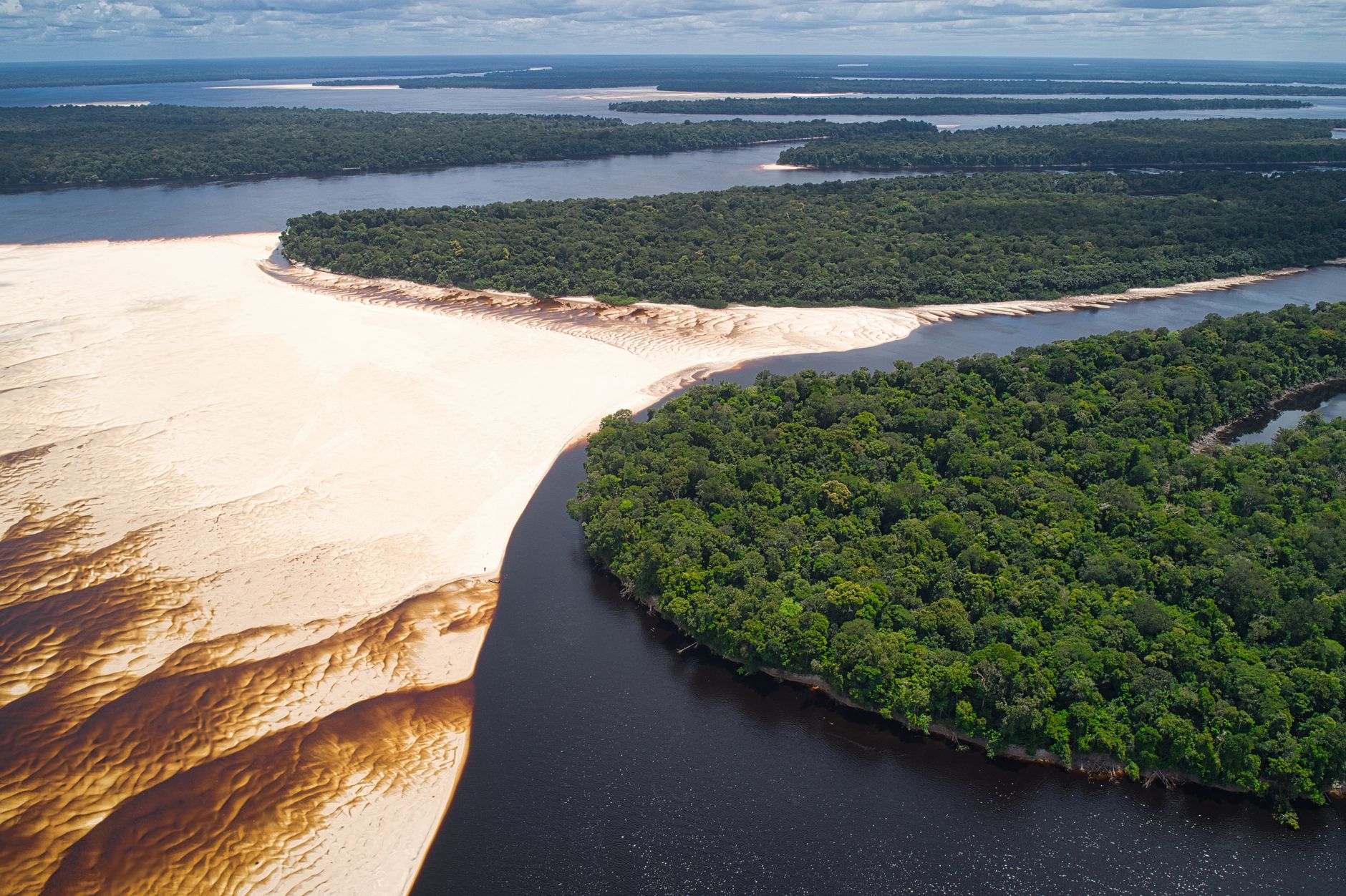
Small reserves also face the problem of isolation. Many forest species need more space than one private parcel can provide. Large mammals may cross boundaries. Rivers, pollinators, seed dispersers, and seasonal flood zones do not follow ownership lines. A reserve that sits inside a connected network can contribute far more than one of the same size surrounded by cleared land.
Financing is another test. Land acquisition is only the beginning. Long-term protection may require boundary work, monitoring equipment, staff, legal support, local partnerships, and repeated maintenance. IUCN guidance stresses sustainable financing, clear objectives, adaptive management, and communication about management. Without those pieces, the reserve may depend too heavily on one owner or one grant period.
How private reserves fit the wider Amazon
The Amazon needs more than one type of protected area. RAISG’s Amazonia 2023 publication says protected natural areas and Indigenous territories together represent 49% of the Amazonian region. That figure should not be read as 49% of the rainforest being equally protected. The categories overlap, the laws differ between countries, and legal recognition does not guarantee effective enforcement.
Private reserves can complement public parks and Indigenous territories by filling gaps and strengthening connections. They can also create a direct way for people outside the region to support a clearly identified protection model. That support is meaningful only when the legal structure, land status, monitoring, and limits of the offer are explained honestly.
Fund The Planet’s own legal protection model und Ucayali rainforest reserve articles provide useful background. The older article on buying rainforest land is also worth reading, provided readers remember that a membership is not a land deed.
A private nature reserve can help save the Amazon when it is part of a serious protection system. The strongest version is not private ownership by itself. It is secure land, a durable purpose, local awareness, connected habitat, and proof that somebody is still paying attention after the announcement has faded.
For readers looking for a practical way to support this kind of work, Fund The Planet offers a concrete protection model. It acquires and legally secures rainforest land in the Peruvian Amazon, then uses memberships to fund protection and give members a visible reserve through the Rainforest Explorer. Members do not receive a land deed, but they do support a defined protection model rather than a symbolic promise.