The lowland tapir does not look like a forest architect at first glance. It moves quietly, eats fallen fruit, slips between trees, and leaves little drama behind. Then the forest begins to grow from where it walked.
Lowland tapirs, Tapirus terrestris, are among South America’s largest native land mammals. In the Amazon, they help move seeds through the forest in a way few smaller animals can. That is why people often call them rainforest gardeners, although the work is less romantic and more ecological: eat fruit, travel, drop seeds, repeat.
The Amazon’s quiet seed disperser
Tapirs are browsers and fruit eaters. They feed on leaves, shoots, fruits, and aquatic plants, then carry seeds through their digestive system before depositing them in dung. For many plants, that journey can move seeds away from the parent tree and into places where young seedlings have a better chance.
This matters because seed dispersal is one of the hidden systems that keeps tropical forests diverse. A forest is not only a collection of trees. It is also a movement network for pollen, fruit, seeds, animals, fungi, and water. Tapirs belong to that network because they can swallow large fruits and move farther than many smaller seed dispersers.
Peer-reviewed research has found that lowland tapirs can disperse seeds in degraded Amazonian forests, including areas affected by fire. Woodwell Climate Research Center summarized the finding clearly: tapirs spent more time in degraded forests and deposited many seeds there, which may help forest recovery. That does not mean tapirs can repair deforestation alone, but it does show why keeping large mammals in the landscape matters.
How the Tapir’s big bodies move big seeds
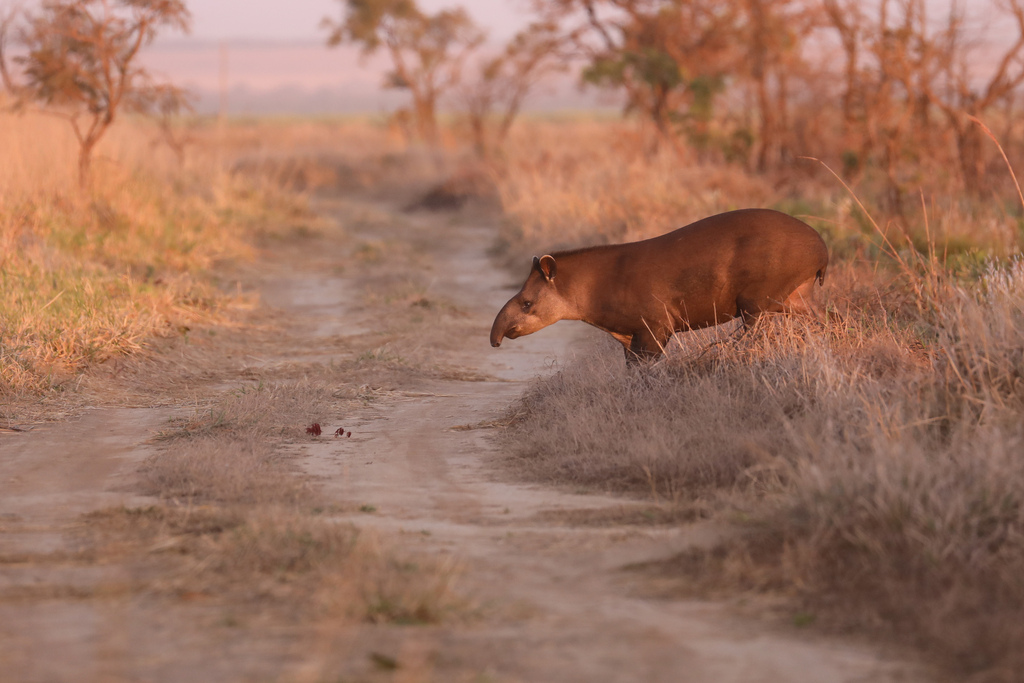
Size gives the lowland tapir a special role. Small birds and mammals can disperse many seeds, but large-bodied animals can handle fruits and seeds that smaller species cannot. When large seed dispersers disappear, some tree species lose an important path for regeneration.
Tapirs can also connect forest patches by moving through different habitats. They use dense forest, wetlands, river edges, and disturbed areas when conditions allow. Each movement can carry seeds across small gaps and into recovering spaces.
That is why the tapir’s quiet behavior has a climate and biodiversity angle. Forest recovery depends on seeds arriving, surviving, and growing into trees. Some of those trees will store carbon, shade soil, feed animals, and become future canopy. The tapir is not a climate solution by itself, but it is one of the living processes that makes forest recovery possible.
Threats facing lowland tapirs
The lowland tapir is listed as Vulnerable on IUCN materials, with hunting, habitat loss, road expansion, and fragmentation among the major concerns. The species has a slow reproductive rate, which makes population recovery difficult when adult animals are removed. A forest can lose tapirs faster than it can replace them.
Hunting pressure is especially serious because tapirs are large, slow-breeding animals. Roads and forest edges can increase access for hunters and fragment habitat. Deforestation does not only remove food and cover. It also breaks the routes that allow tapirs to move safely between feeding and resting areas.
Fund The Planet’s article on the impact of deforestation on the Amazon rainforest explains the wider pattern: when forest is opened, wildlife loses more than trees. It loses shade, water stability, food routes, breeding places, and the safety of connected habitat.
Protecting the gardener means protecting the garden
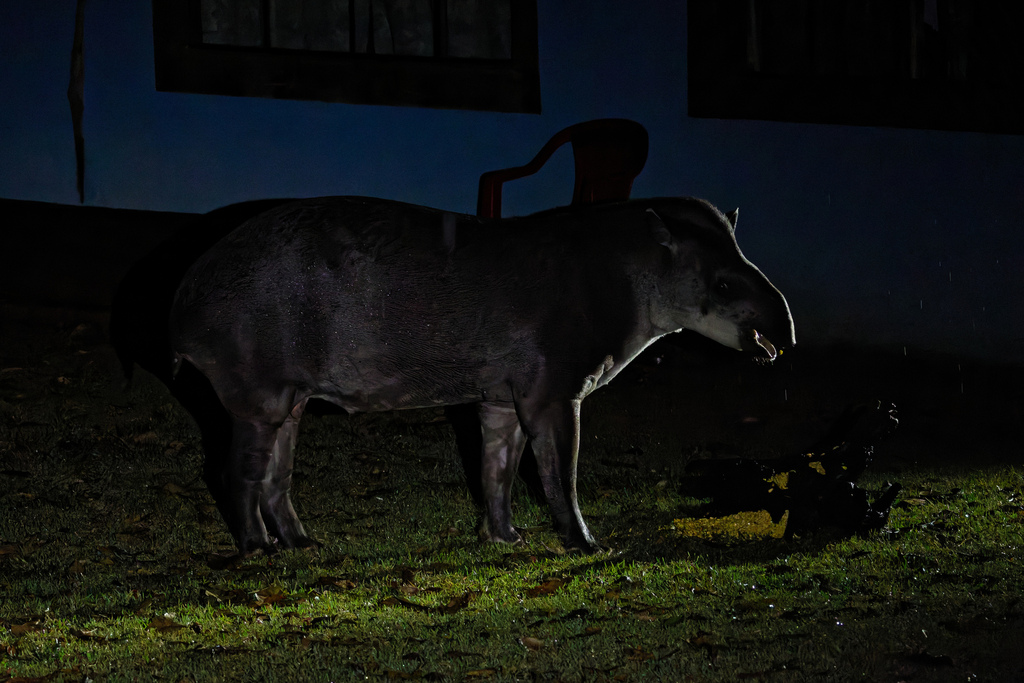
The tapir’s conservation story is not only about one unusual mammal. It is about the kind of forest that can still support large, shy, wide-ranging animals. If tapirs are present, it often means the landscape still has enough cover, food, and connectivity for a deeper ecological process to continue.
Protecting tapirs means protecting intact forests, restoring degraded corridors, reducing hunting pressure, and keeping rivers and wetlands healthy. It also means valuing the quiet work that happens away from the dramatic wildlife moments. Not every important rainforest animal announces itself from the canopy.
The lowland tapir plants no trees by intention. It simply lives as a tapir, following fruit, water, shade, and safety. The forest has evolved around that movement. When we protect the habitat, we protect the animal and the slow, muddy, seed-filled path of regeneration it leaves behind.