
Illegal gold mining is damaging forests and rivers across the Peruvian Amazon. MAAP monitoring, based on satellite imagery, recorded 139,169 hectares of mining-driven deforestation by mid-2025. The pressure reaches nine regions, including Ucayali. That makes the trend relevant to the region where Fund The Planet works, but this article does not claim a specific overlap with FTP-protected land.
This is not a distant problem. Fund The Planet operates in Peru’s Ucayali region, directly adjacent to some of the most affected areas. Understanding what illegal gold mining does to the Amazon is part of understanding what real protection means here, and why it matters now more than ever.
Scars That Keep Spreading
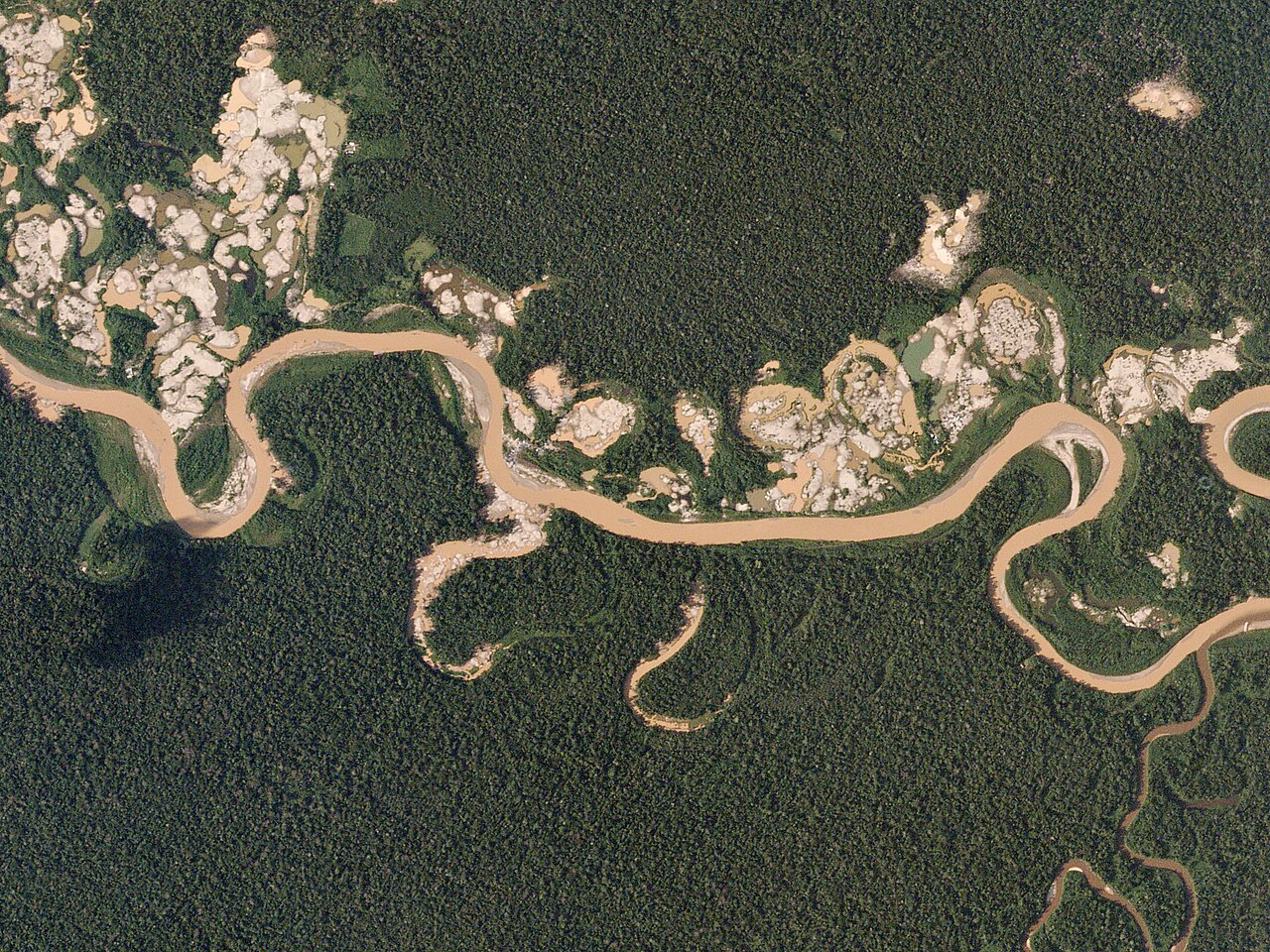
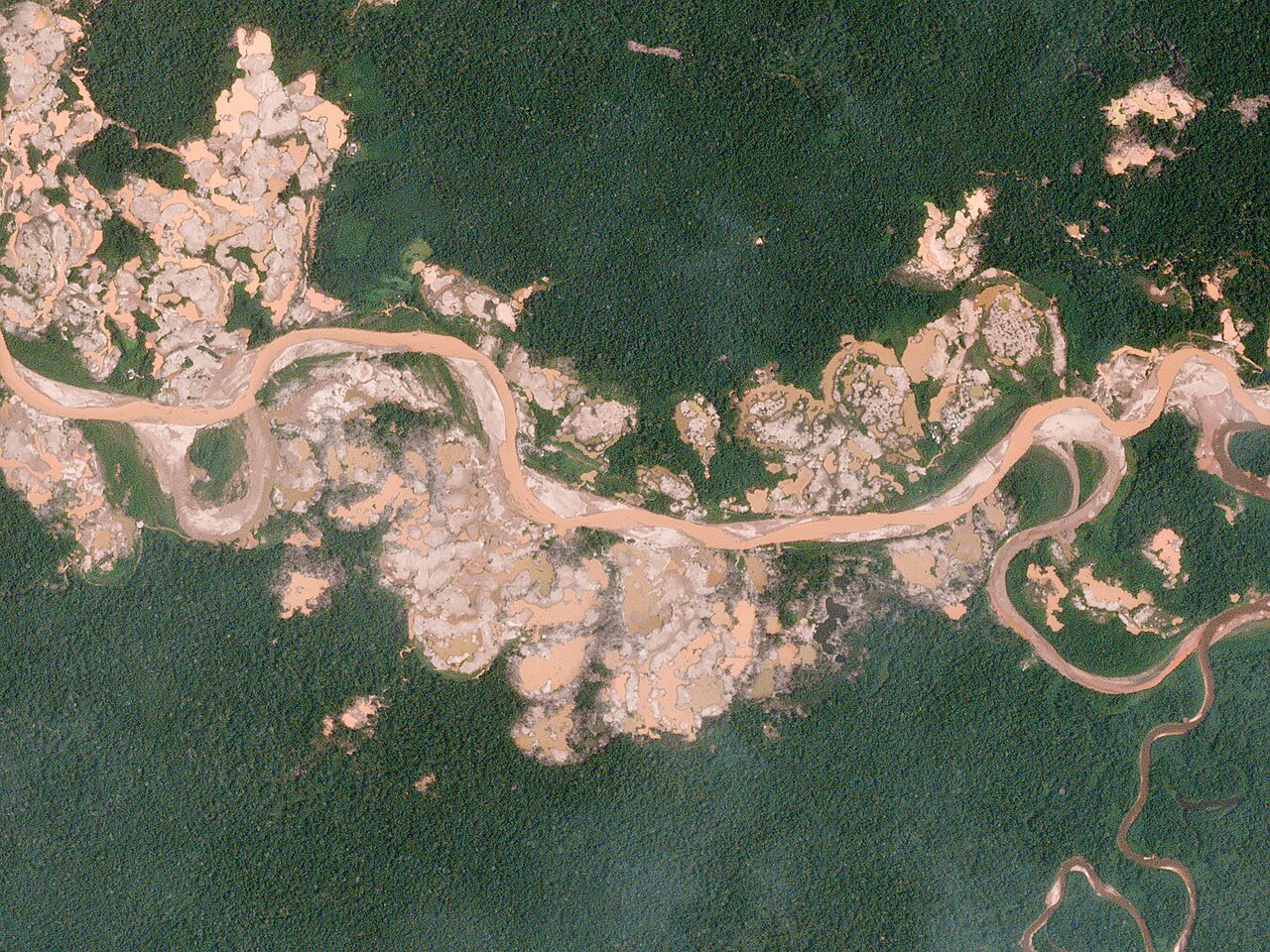
The numbers tell a stark story. According to monitoring data from MAAP (Monitoring of the Andean Amazon Project), gold mining caused 139,169 hectares of deforestation in Peru between 1984 and mid-2025. That is roughly 343,894 acres of forest, an area larger than the city of Los Angeles. The Madre de Dios region accounts for 97.5% of that destruction, making it the epicenter of the crisis. But mining has now spread to nine regions across the Peruvian Amazon, reaching areas that were untouched a decade ago.
What makes this particularly alarming is the pace and scale of the expansion. Mining operations have expanded along 225 rivers and streams, turning clearwater systems into sediment-choked channels that run brown for miles downstream. Forest that took centuries to grow is cleared in days using heavy machinery. The exposed soil, stripped of root systems and leaf cover, erodes quickly and feeds sediment into waterways that communities and wildlife depend on for survival.
The economic losses are staggering. A recent Mongabay analysis documented $593,786,943 in losses across just three communities in a single year between August 2022 and 2023. That figure includes lost ecosystem services, degraded fisheries, and the long-term economic damage of removing the forest that supports local livelihoods. The communities most affected by mining are often the ones with the fewest resources to recover, creating a cycle where poverty drives mining and mining deepens poverty.
The crisis in Madre de Dios and the broader mining regions shows how quickly damage can become entrenched when enforcement is inconsistent and economic pressures are strong.
Mercury in the Water, Mercury in the Body
Gold mining in the Amazon relies heavily on mercury. Miners mix liquid mercury with sediment to bind with gold particles, then burn off the mercury to isolate the metal. The vaporized mercury settles into rivers and soil, enters the food chain through fish, and accumulates in the people who live downstream. It is a process that is efficient for extraction and devastating for everything else.
A 2021 study found that 71% of people living in mining communities had hair-mercury levels above US EPA safety thresholds. What is often overlooked is that 80% of people living outside mining communities, downstream and further away, also tested above those levels. Mercury does not stay where it is released. It travels through water systems and concentrates in fish, which are a primary protein source for many Amazonian communities. The contamination follows the rivers, reaching people who have never seen a mining operation but eat the fish that swim through poisoned water.
The health effects are serious and long-lasting. Mercury exposure damages the nervous system, impairs cognitive development in children, and can cause kidney and cardiovascular problems. For indigenous and riverine communities who rely on fishing for food and income, the contamination is not just an environmental issue. It is a daily health crisis with no easy workaround, and it compounds the pressures that already make life in remote Amazon communities difficult.
This is one reason why protecting the Peruvian Amazon matters so urgently. The species that depend on these waterways, from pink river dolphins to giant otters, face the same contamination through the fish they eat and the water they breathe. But the human toll is what gives the crisis its weight.
The Carbon Hidden Beneath the Surface
The visible destruction of mining is dramatic enough: stripped riverbanks, muddy pits, and stumps where canopy used to be. But some of the most serious damage happens below ground, in peatland ecosystems that most people have never heard of.
Peru’s Amazon peatlands are ancient, carbon-rich swamp forests that have been accumulating organic material for thousands of years. According to research published in Environmental Research Letters and covered by Mongabay, over 550 hectares of peatland have already been destroyed by mining, and more than 10,000 hectares face immediate risk. These are not just any hectares. Peatland stores vastly more carbon per unit area than typical rainforest. Researchers estimate that up to 14.5 million metric tons of carbon could be released if the at-risk peatlands are destroyed.
To put that in perspective, 14.5 million metric tons of carbon is roughly equivalent to the annual emissions of a small country. And unlike above-ground forest, which can regrow relatively quickly, peatland takes thousands of years to accumulate its carbon stores. Once it is dug up and exposed to air, that carbon enters the atmosphere and does not go back on any human timescale. The combination of deforestation and peatland destruction means that illegal gold mining is not just a local environmental problem. It is a significant and largely underreported contributor to global carbon emissions.
Protection has to be specific: legal land security, clear boundaries, local partnerships and monitoring. For context on the wider drivers, see the four commodities linked to rainforest loss and our explainer on the Madre de Dios mining crisis.
What Real Protection Looks Like
Peru has tried enforcement. In 2019, Operation Mercury deployed military and police forces to dismantle mining camps in Madre de Dios. It was a short-term success. Deforestation dropped visibly in the targeted areas. But during the COVID-19 pandemic, mining operations rebounded and expanded into new areas, spreading beyond their traditional strongholds into regions that had previously been spared. Enforcement alone has not proven durable enough to stop the cycle.
The challenge is structural. Illegal gold mining is driven by global gold prices, poverty in mining regions, and weak governance in remote areas where roads and law enforcement are scarce. A single excavator can clear forest and process ore faster than any patrol can respond. The solution, if there is one, requires multiple approaches working together: legal protection of forest land, community-based monitoring, alternative livelihoods, and the kind of transparent, traceable conservation that makes protected areas genuinely off-limits to extraction.
This is where Fund The Planet’s work in the Ucayali region becomes directly relevant. Ucayali sits in the western Amazon, a region where mining pressure is real and growing. By legally acquiring and protecting rainforest land, FTP creates areas where extraction simply cannot happen. The boundary pinning project physically marks protected boundaries, making it harder for illegal operations to encroach on secured land without detection.
The legal protection framework that underpins FTP’s model is not symbolic. It is backed by land ownership, community partnerships, and ongoing monitoring through the Rainforest Explorer platform. Members can view their protected-area allocation in the Rainforest Explorer and receive regular updates.
The hidden cost of gold is paid by rivers that run brown with sediment, by children whose nervous systems absorb mercury from their food, and by peatlands that release carbon accumulated over millennia. Protecting the Amazon from illegal mining is not a matter of good intentions alone. It requires legal certainty, operational presence, and the kind of sustained commitment that outlasts any single enforcement operation. That is the work, and it is happening now.
The gold may be extracted in days. The damage lasts generations.


 EN
 DE