The Waorani people, also known as the Huaorani, have lived in the western Amazon, across what is now Ecuador and northern Peru, for centuries. Their language, Wao Terero, is a linguistic isolate with no known relatives, a marker of just how long they have inhabited this particular stretch of forest. To spend time in Huaorani territory is to understand that the boundary between a person and the forest is not always as sharp as Western thought insists it must be.
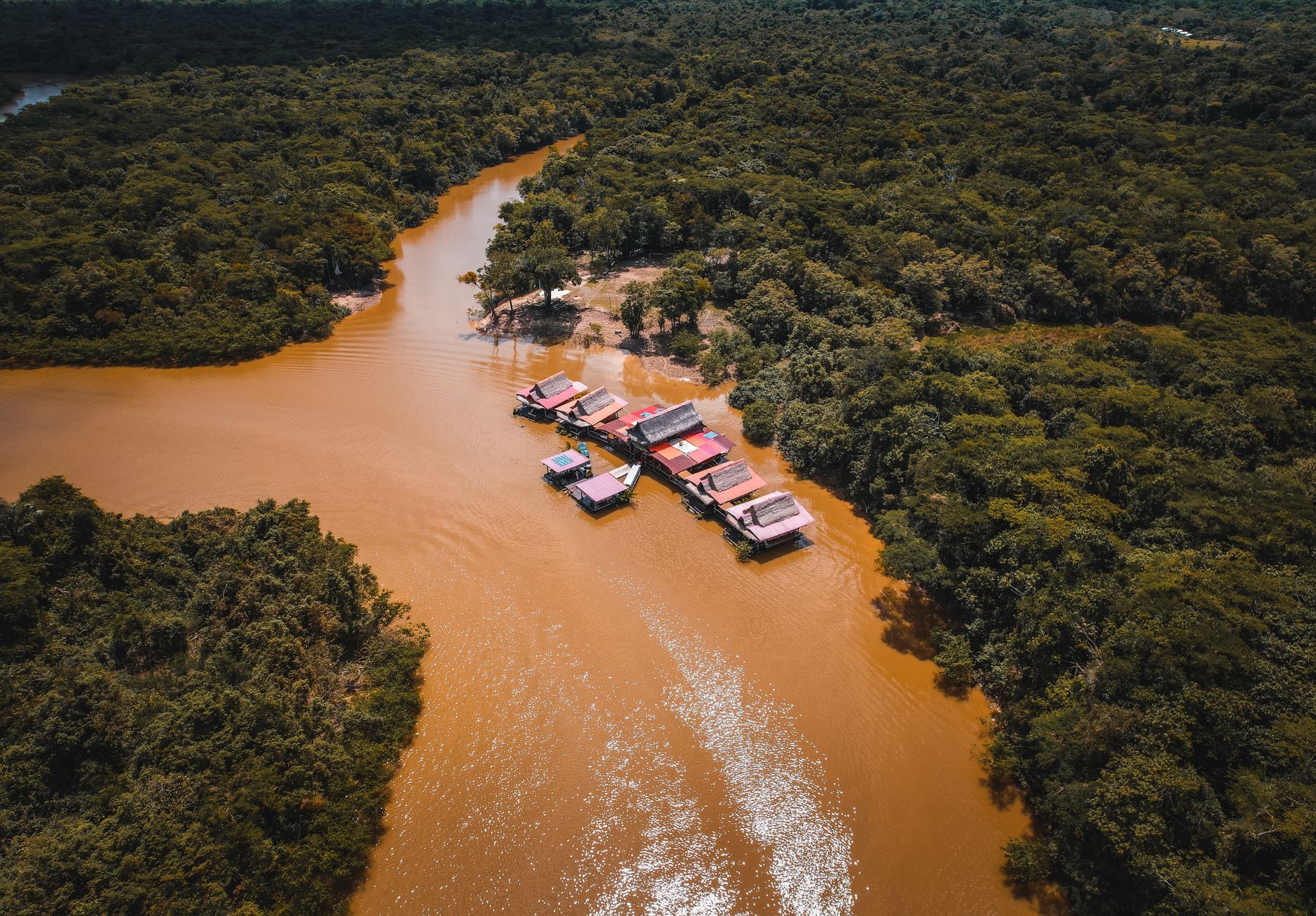
Huaorani village
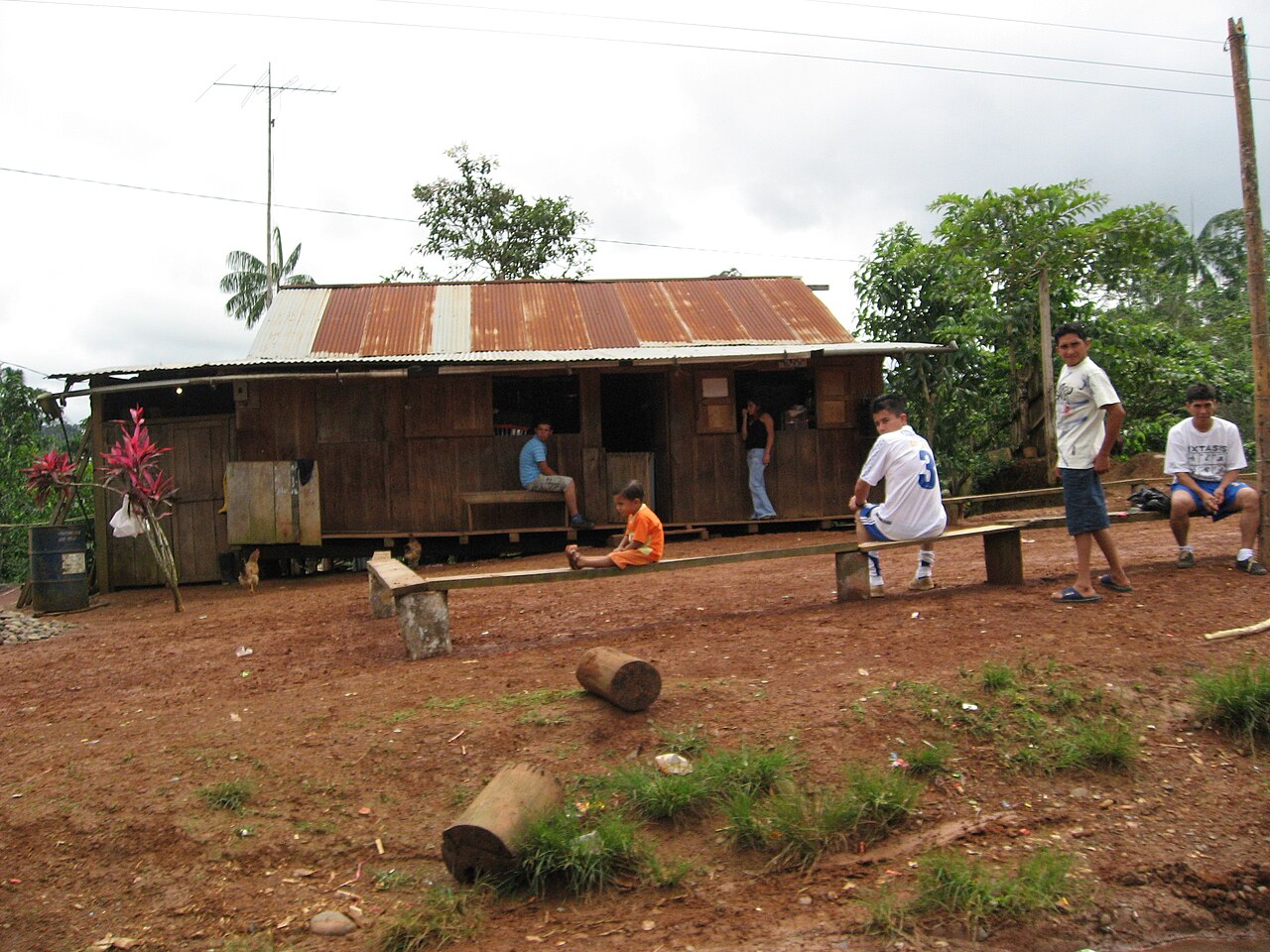
The legally recognized Waorani Ethnic Reserve in Ecuador covers approximately 680,000 hectares across the provinces of Pastaza, Napo, and Orellana. Ancestral lands extend further into Yasuni National Park, one of the most biodiverse places on Earth, and across the border into Peru. An estimated 3,000 to 4,000 Huaorani live in communities across this territory, with several hundred more believed to live in voluntary isolation deeper in the forest.
Huaorani knowledge of their environment is encyclopedic. They distinguish hundreds of plant and animal species by name. They understand the medicinal properties of forest plants that Western science has never formally studied. They navigate the dense Amazon understory with a fluency that researchers have spent entire careers attempting to document. Hunting, gathering, and small-scale cultivation supply most of their material needs, and the forest provides in abundance when it is kept intact.
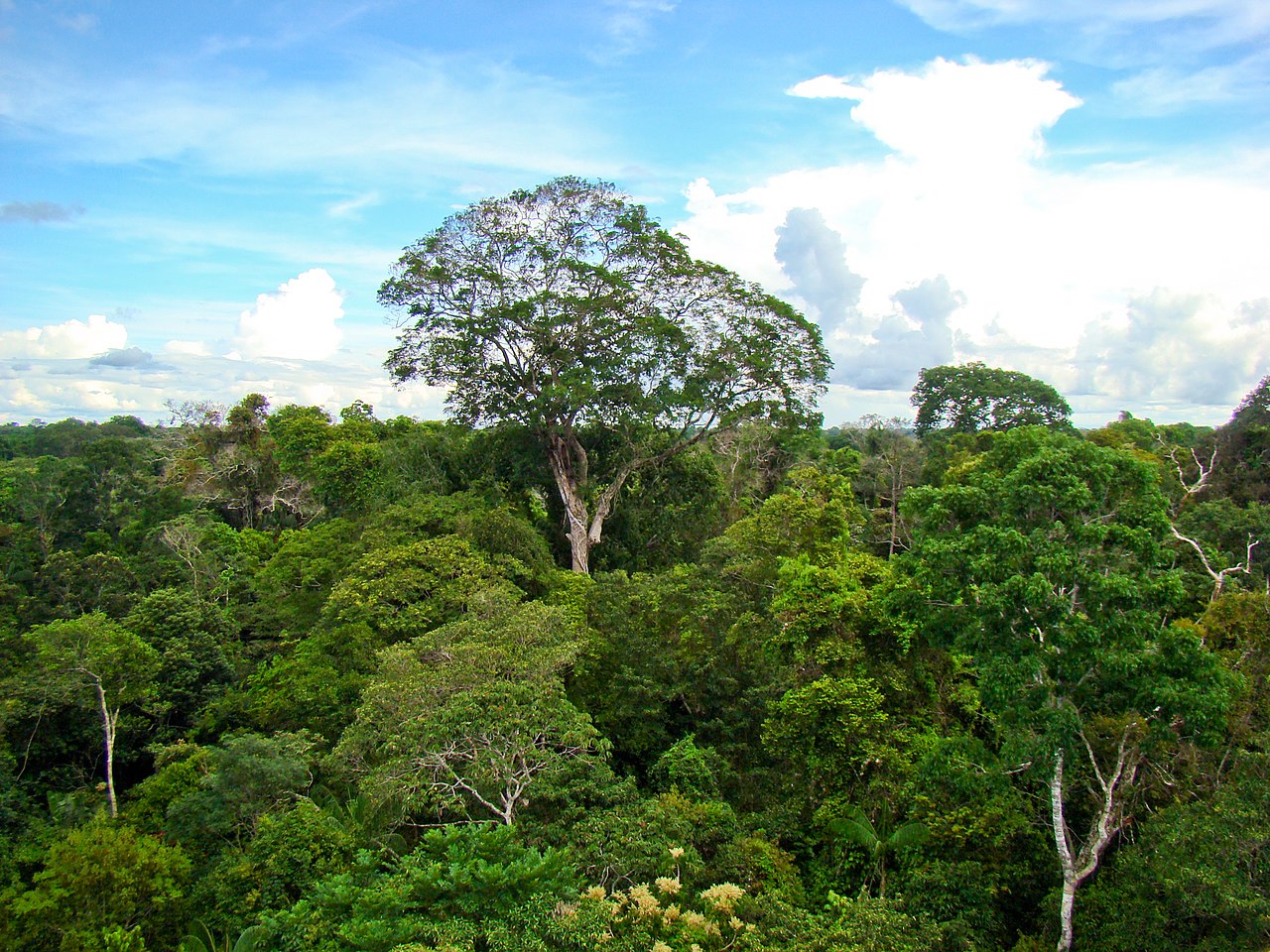
Their traditional territory sits within Yasuni National Park, which scientists have identified as harboring the highest recorded tree species richness per hectare on the planet. Research published in PLoS ONE documented more than 650 tree species in a single hectare of Yasuni forest, a figure that exceeds the total number of native tree species found in all of North America. The Huaorani have stewarded this biological treasure for generations without depleting it.
Huaorani leader
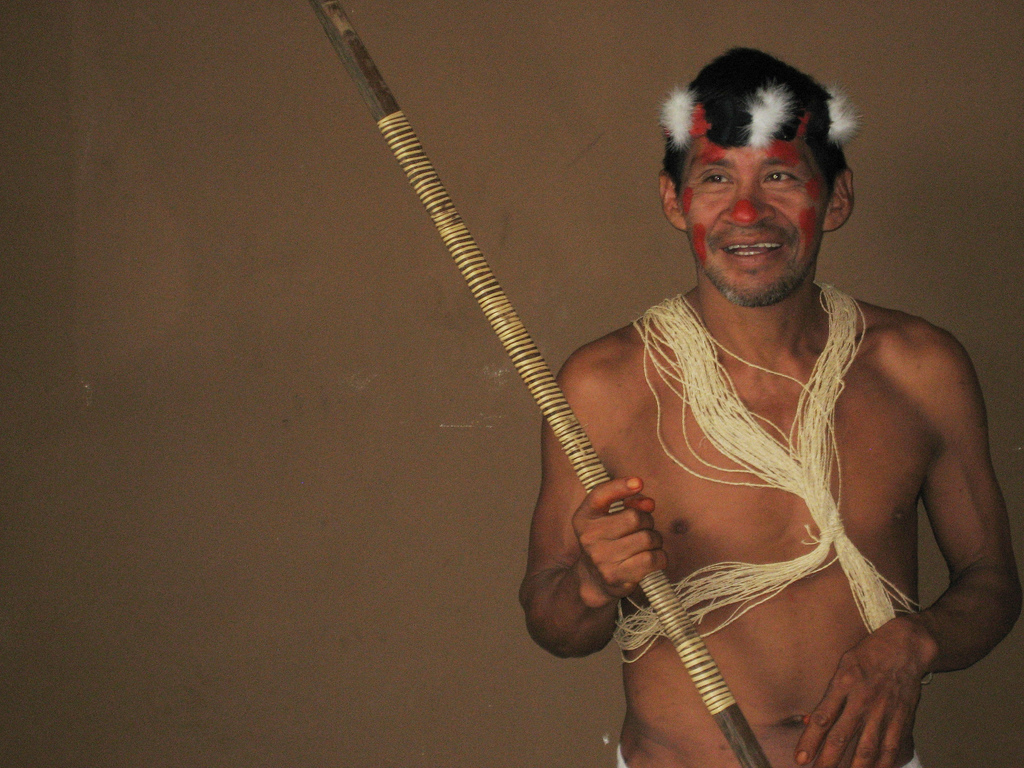
The same forest that makes Huaorani territory ecologically extraordinary also makes it economically attractive to extractive industries. Since the 1950s, when oil exploration began in the Ecuadorian Amazon, Huaorani lands have been carved into concession blocks and opened to drilling. Block 16, inside Yasuni, became a flashpoint in the 1990s for conflict between indigenous communities and petroleum companies, a conflict that continues in new forms today.
In 2019, the Huaorani won a landmark legal victory. An Ecuadorian court ruled that the government had violated its obligation to obtain free, prior, and informed consent before auctioning Huaorani lands for oil exploration. The ruling protected 180,000 hectares from drilling and established that indigenous consent is a genuine legal barrier to extraction, not a procedural checkbox that can be bypassed with paperwork.
That victory did not end the pressure. In a 2026 Mongabay interview, Waorani leader Juan Bay described how Ecuador is failing to end oil drilling in Yasuni despite international pledges and court rulings. New drilling projects continue to advance. Old promises to leave the oil in the ground have been walked back. The fight that seemed won in 2019 remains unfinished.
The conservation stakes are difficult to overstate. Forests managed by indigenous communities consistently show lower deforestation rates than state-protected areas across the Amazon. When the Huaorani defend their territorial rights, they are defending one of the most carbon-dense, species-rich forest landscapes left on any continent.
Huaorani kids
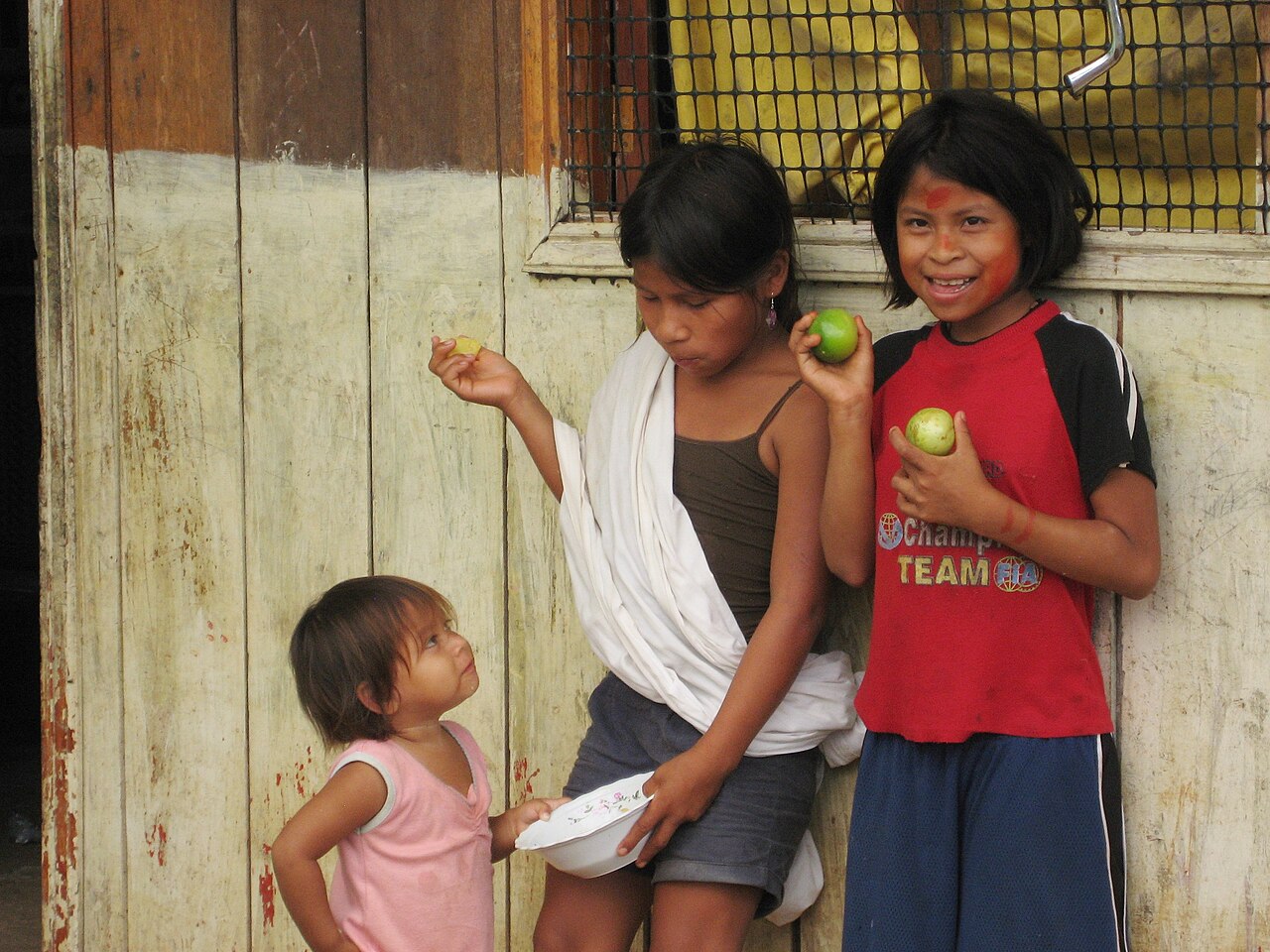
The Huaorani relationship with the forest challenges a persistent assumption: that protecting nature requires removing people from it. Their model suggests something closer to the opposite. The forest is not a wilderness to be cordoned off behind fences. It is a living system that humans have shaped, learned from, and depended on for thousands of years.
This is not unique to the Huaorani. The Yanomami, one of the Amazon’s largest indigenous groups, protect a territory spanning more than 9 million hectares through the same combination of traditional knowledge and sustained legal advocacy.
The ancient connection between indigenous people and the Amazon has shaped the composition of the forest itself, from the distribution of Brazil nut trees to the soils of terra preta, the human-made fertile earth that covers significant portions of the basin. These are not untouched wildernesses. They are managed landscapes, cultivated over millennia by people who understood that their survival depended on the forest’s continued health.
In the Ucayali region of the Peruvian Amazon, indigenous and local communities play much the same role, protecting ecosystems that global conservation organizations now recognize as irreplaceable. The pattern repeats across the Amazon because it is not a coincidence. It is what happens when people who depend on the forest for their physical and cultural survival are given the legal standing to defend it.
The Huaorani remind us that some of the most effective forest protection on Earth is not being done by conservation organizations at all. It is being done by people who call the forest home, armed with generational knowledge, legal rights that were hard-won in courts and streets, and an understanding of the land that no external expert can replicate or replace.