The hoatzin bird, a creature so unique it defies easy comparison: equal parts prehistoric oddity and specialized marvel of evolution. Known locally as the “stinkbird” for its unusual digestive process and nicknamed the “flying cow” for its leaf-based diet, the hoatzin seems pulled from another era, a living link to a forgotten world
But what makes the hoatzin bird truly extraordinary runs deeper than its quirky nicknames. This Amazonian resident showcases evolution’s ingenuity: a bird whose stomach operates like a cow’s, specialized to ferment leaves, and whose chicks retain wing claws reminiscent of the age of dinosaurs.
Through the lens of this bizarre yet captivating bird, we can uncover its biology, its habitat, and its significance to one of Earth’s most vibrant ecosystems. Along the way, consider this: conserving places like the Amazon doesn’t just save extraordinary creatures like the hoatzin, but also the countless connections that sustain them.
The Extraordinary Anatomy of the Hoatzin Bird

Photo: Dario Taraborelli · iNaturalist · CC0 1.0
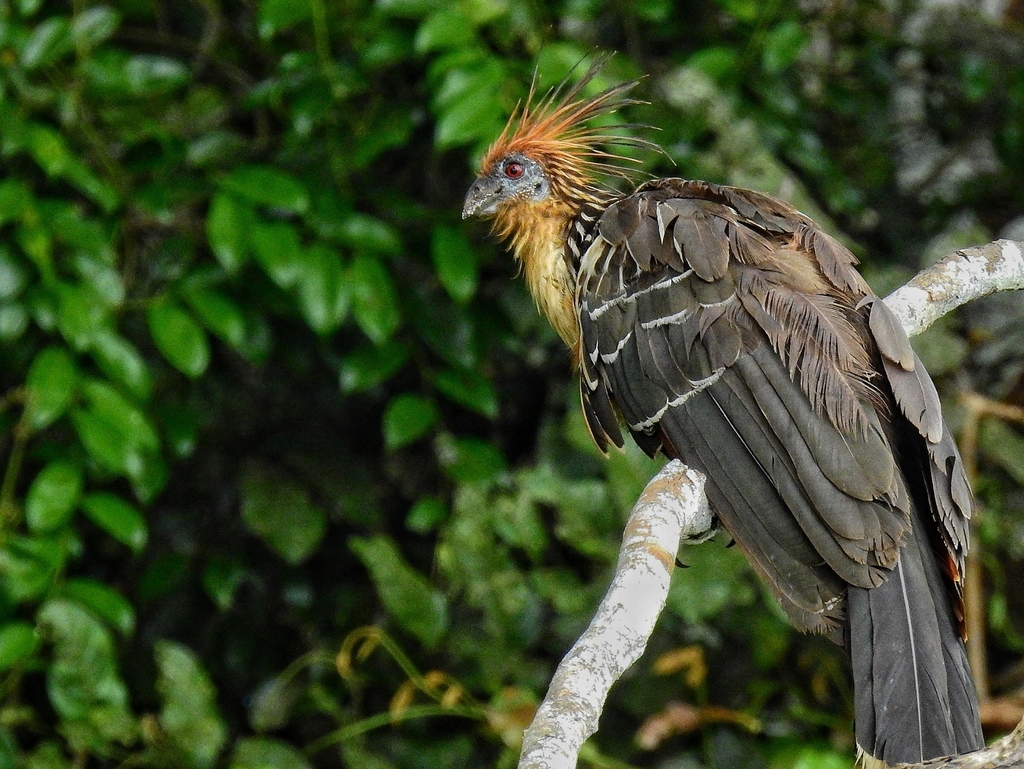
Perched amidst the impenetrable greenery of the Amazon rainforest, the hoatzin bird seems more ancient than modern:a creature that could belong in a museum exhibit on prehistory. Its crimson eyes, set against dark feathers, and its untamed spiky crest create an unforgettable silhouette. This bird, perched on the fringes of South America’s waterways, is among the most distinctive avian residents of the Amazon.
Unlike the vibrant macaws or the regal harpy eagle, the hoatzin captivates with its humble, earth-toned plumage and almost comical presence. Scientists remain fascinated by how closely this bird resembles the ancient Archaeopteryx, a reflection of its evolutionary link to the distant past. The prehistoric traces embedded in its appearance are tangible reminders of Earth’s deeper story.
For more about the Amazon’s incredible winged creatures, explore 10 Colorful Amazon Birds.
Why Does the Hoatzin Bird Have Claws?
The youngest hoatzins carry one of nature’s most unexpected evolutionary throwbacks: claws on their wings. These small, hook-like appendages allow hoatzin chicks a unique survival strategy. When predators such as snakes or caimans approach, the chicks leap from their nests into nearby water to escape. Once the threat passes, the claws allow them to climb back up, branch by branch.
This seemingly ancient trait links the hoatzin to its dinosaur-like ancestors, bridging millions of years of evolution in one small bird. As adults, the claws vanish:relics of youth:but their presence reminds us how evolution adapts through time, preserving utility wherever it is needed.
Intrigued by evolution’s surprises? Learn more in 5 Rainforest Animals You’ll Swear We Made Up.
The Digestive Marvel: A Flying Cow in the Canopy
Beneath its unusual exterior lies an internal system as fascinating as its appearance. While most birds feed on seeds, insects, or small animals, the hoatzin has charted an unexpected evolutionary path: thriving on a diet of leaves. This simple choice has shaped the bird’s biology in remarkable ways.
The hoatzin’s digestive system utilizes microbial fermentation, a process seen more often in herbivorous mammals like cows. The crop, an enlarged pouch near the bird’s throat, becomes a fermentation chamber where bacteria break down tough leaves, extracting nutrients. While this adaptation enables survival in leaf-rich habitats, it comes at a price. The fermentation process requires significant space and energy, reducing the bird’s flight efficiency and making it a particularly clumsy flier.
The ingenuity of fermentation comes with an aromatic consequence. Gases released during the digestive process produce a pungent odor, often likened to rotting hay. This smell earned the hoatzin its unflattering nickname “stinkbird.”
But where humans may wrinkle their noses, many Amazonian communities recognize the hoatzin’s unique scent as a reassuring sign of healthy wetlands. The smell symbolizes places rich with life:a sensory marker tied to ecosystems brimming with biodiversity. The stinkbird, despite its peculiarities, evokes appreciation and respect as part of this delicate balance.
Habitat and Distribution: Where to Find Hoatzins

The hoatzin bird is an unmistakable emblem of the Amazon’s watery landscapes. Preferring swamps, lagoons, and riverbanks, the species nests where water and vegetation intertwine, providing both sustenance and security. These tranquil aquatic environments are essential not only as a home but as a stage for survival, offering nesting opportunities and enough greenery to fuel their leaf-based diets.
Though most commonly associated with the Amazon, the bird’s range extends to parts of the Orinoco Basin and neighboring Guyana, where it holds status as a national bird. Across its geographic spread, the hoatzin’s attachment to water is unwavering.
Ecological Role: A Keystone Species in Disguise
Beneath its odd appearance, the hoatzin hides an ecological importance that pulses through the rainforest’s veins. By consuming leaves, flowers, and fruits, the bird inadvertently aids in seed dispersal, scattering the potential for new plant life within the fertile Amazon wetlands.
Its dietary patterns also regulate plant species that might otherwise dominate, ensuring biodiversity thrives. The hoatzin’s role may operate quietly, but its impact ripples outward, shaping the health of its ecosystem far beyond what meets the eye.
The hoatzin is not just a keystone species but an environmental barometer. It thrives only in unpolluted, healthy wetlands, making its presence a sign of a thriving habitat. Conversely, its decline often points to deforestation, contamination, or other forms of degradation.
Despite its adaptability, the hoatzin faces threats tied directly to Amazonian deforestation. The expansion of agricultural land and cattle ranching continues to destroy its wetland habitats, while climate change poses new challenges through altered rainfall patterns and shrinking waterways.
For deeper insight into the rainforest’s fragility, visit The Impact of Deforestation on the Amazon Rainforest.