In the slow, tea-colored waters of an Amazonian swamp, something immense stirs just beneath the surface. Only two dark eyes and a pair of nasal slits break the waterline, the rest of the animal hidden in the murk. It is a green anaconda (Eunectes murinus), the heaviest snake on Earth, capable of reaching 9 meters in length and weighing more than 250 kilograms. This is not a creature of legend, though legends it has certainly inspired. It is a real apex predator whose biology, behavior, and relationship with the Amazon’s waterways make it one of the most fascinating reptiles on the planet.
What Is the Green Anaconda?
Auch green anaconda is a nonvenomous constrictor in the boa family (Boidae), native to the river basins of northern South America. Its common name refers to its olive-green coloration, marked by dark oval spots along the spine and yellow-centered black circles along the flanks. The scientific name Eunectes murinus translates roughly to “good swimmer” and “of mice,” though the anaconda’s actual prey list makes that second part almost comically undersized.
Recent genetic research has split the green anaconda into two species: the southern green anaconda (Eunectes murinus) of the Amazon basin and the northern green anaconda (Eunectes akayima) of the Orinoco basin. Both are morphologically similar, and the distinction is still debated among herpetologists. For most purposes, and for most of the people who live alongside these snakes, the green anaconda is simply the giant of the water.
Females are dramatically larger than males, a trait called sexual dimorphism that is extreme even by snake standards. A large female can stretch to 9 meters and measure 30 centimeters across at her widest point. Her weight, at more than 250 kilograms, makes her not just the longest snake in the Americas but the heaviest snake anywhere in the world. The reticulated python of Southeast Asia can grow longer, but it cannot match the anaconda’s girth.
The anaconda’s body is a study in adaptation. Its olive-green skin with dark oval markings provides near-perfect camouflage in the dappled light of flooded forests. The eyes and nostrils positioned on top of the head allow it to remain almost completely hidden while watching and breathing. And its muscular body, while heavy on land, becomes fluid and efficient in water, where the snake spends most of its life.

Life in the Water
Everything about the green anaconda’s body is built for an aquatic life. Its eyes and nostrils sit on top of its head, allowing it to see and breathe while almost entirely submerged. It can hold its breath for extended periods and moves through water with a silent, sinuous grace that belies its bulk. On land, it is slower and more vulnerable, which is why it rarely ventures far from the swamps, streams, and seasonally flooded forests that define its range across the Amazon and Orinoco basins.
The anaconda is an ambush predator. It lies motionless in shallow water, camouflaged by its olive skin against the murky bottom, and waits. Heat-sensing pits on its upper lip detect the body warmth of approaching animals. When prey comes close enough, the strike is explosive. The anaconda seizes the animal in its jaws, wraps its muscular body around it, and constricts until the prey suffocates. It then swallows the animal whole, its jaw ligaments stretching to accommodate prey far wider than the snake’s own head.
The diet of a green anaconda changes with size. Juveniles hunt fish, birds, and small mammals. Adults take on deer, capybaras, caimans, wild pigs, and on rare occasions, jaguars. Their metabolism is slow, and an adult can go weeks or even months between meals. A large kill may sustain a female for an entire breeding cycle.
Reproduction and the Breeding Ball
Anaconda reproduction is one of the most dramatic spectacles in the animal kingdom. During the dry season, typically between March and May, a female releases pheromones into the water that attract every male in the area. What follows is the breeding ball: up to a dozen males coil around a single female, competing for position and the chance to mate. The ball can last for weeks, the snakes writhing together in a slow, muscular tangle.
Once mating is complete, the female may eat one of the smaller males, a behavior that provides her with the energy she needs for the long gestation ahead. She will not eat again for the next seven months while carrying her young. Anacondas are ovoviviparous, meaning the eggs develop and hatch inside the mother’s body. She gives birth in water to 20 to 40 live young, each about 60 centimeters long and fully capable of swimming and hunting from the moment they emerge. The largest recorded litter contained 82 newborns.

The cost of reproduction is high. Females typically breed only every other year, and their lifespan in the wild averages about 10 years, though individuals in human care have lived into their late twenties.
The Anaconda and Its Threats
Despite its size and position at the top of the food chain, the green anaconda faces real threats. Habitat loss is the most significant. The swamps, streams, and flooded forests of the Amazon basin are being drained, dammed, and cleared for agriculture and infrastructure. When the waterways that anacondas depend on are disrupted, the snakes cannot simply relocate. They are tied to water in ways that terrestrial predators are not.

Human fear also takes a toll. Anacondas are killed on sight in many parts of their range, targeted because of their size and the persistent myth that they actively hunt people. In reality, there is no verified record of a green anaconda consuming a human being. The snake is an ambush specialist that targets prey it can physically overpower and swallow, and adult humans fall outside that category.
The international pet trade and the market for anaconda skins add additional pressure. The species is listed under CITES Appendix II, which regulates international trade, but enforcement is inconsistent across its range. In the more remote parts of the Amazon, anacondas are hunted with little oversight.
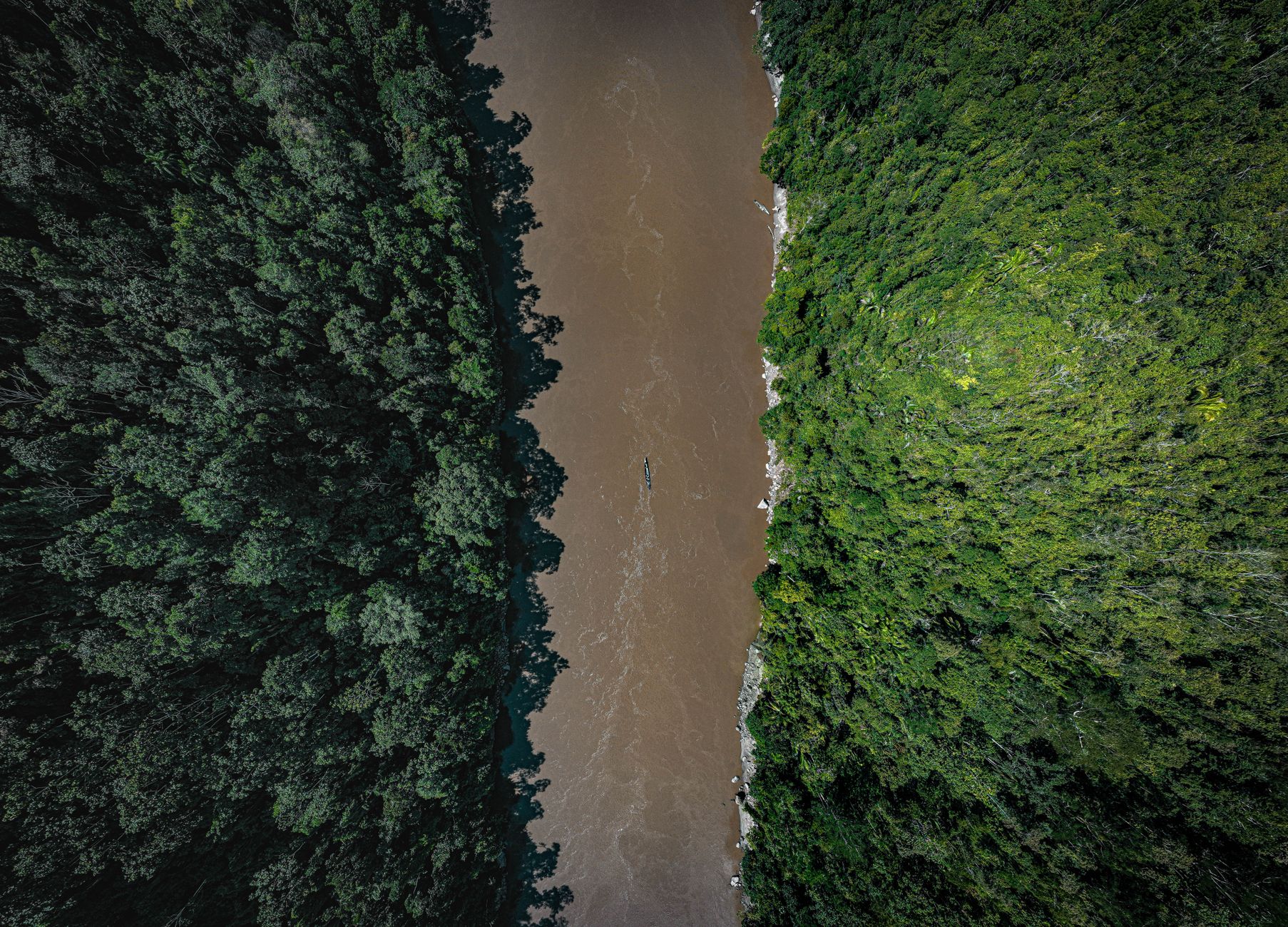
Protecting the anaconda means protecting the waterways of the Amazon. A healthy Peruvian Amazon river system supports not just this giant snake but the entire web of life that depends on flooded forests: fish, caimans, river dolphins, and the human communities that have fished these waters for millennia.
The green anaconda does not need to be feared. It needs its rivers left flowing, its swamps left intact, and its place in the Amazon understood for what it is: not a monster, but a masterwork of evolution shaped by one of the most productive ecosystems on Earth.