Açaí is often introduced to the world as a purple smoothie bowl. In the Amazon, the plant behind that image is a floodplain palm with a much longer story. Euterpe oleracea grows in seasonally flooded forests and produces clusters of small fruits whose pulp has become a global commodity. The plant’s biology, local food traditions, and expanding market all raise the same question: can demand for a forest product support intact forest without simplifying the ecosystem around it?
The tree behind the berry
The açaí palm is adapted to wet lowlands, where water levels rise and fall through the year. It often grows in clumps rather than as a single isolated trunk. That growth form matters because an açaí stand is part of a wider floodplain community, alongside trees such as the kapok, not a crop floating outside its surroundings.
A useful botanical reference is the published Euterpe oleracea overview. It places the palm in the wider relationship between Amazon plants and the people who use them. The fruit is small, seed-heavy, and covered by a thin layer of pulp. In communities along the Amazon estuary, açaí has long been treated as food rather than a luxury health product. It is commonly prepared with other staples, and its importance depends on local diets as much as on international marketing.
The modern export story came later. Frozen pulp, branding, and the language of the superfood market turned a regional food into a product recognised far beyond Brazil. That change created new income opportunities, but it also made the supply chain harder to see from the outside.
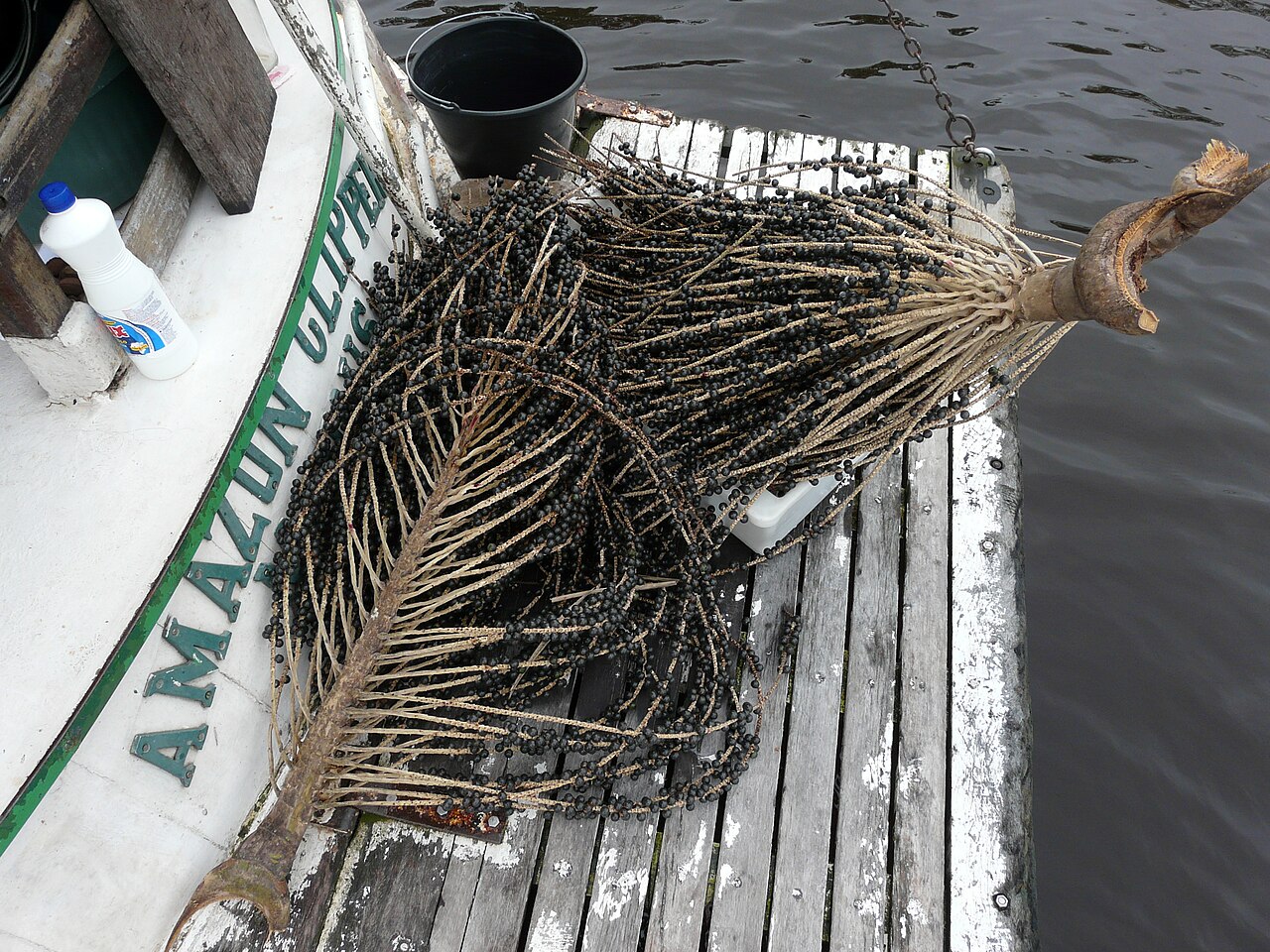
When forest products meet global demand
Harvesting fruit from standing palms can be compatible with forest cover. A producer does not need to clear an entire floodplain to collect açaí, and the value of the harvest can give families a reason to keep productive forest standing. That is the hopeful part of the story.
It is not an automatic conservation solution. If management focuses too heavily on a single palm, other trees can be removed and the floodplain can become less diverse even while it still looks green from above. A forest with many palms is not necessarily the same as a healthy forest with many species. The difference is easy to miss when conservation is measured only by canopy cover.
The supply chain also divides value unevenly. Harvesters take on the physical risk and work of collecting the fruit, while processing, branding, and retail often happen elsewhere. A market can reward intact forest and still leave the people who maintain it with too little control or income. That tension belongs in any honest account of açaí.
The broader açaí review literature is useful here because it shows how quickly nutrition, health marketing, and social claims can become mixed together. The fruit can be nutritious without every product claim being proven, and a market can be valuable without being fair.
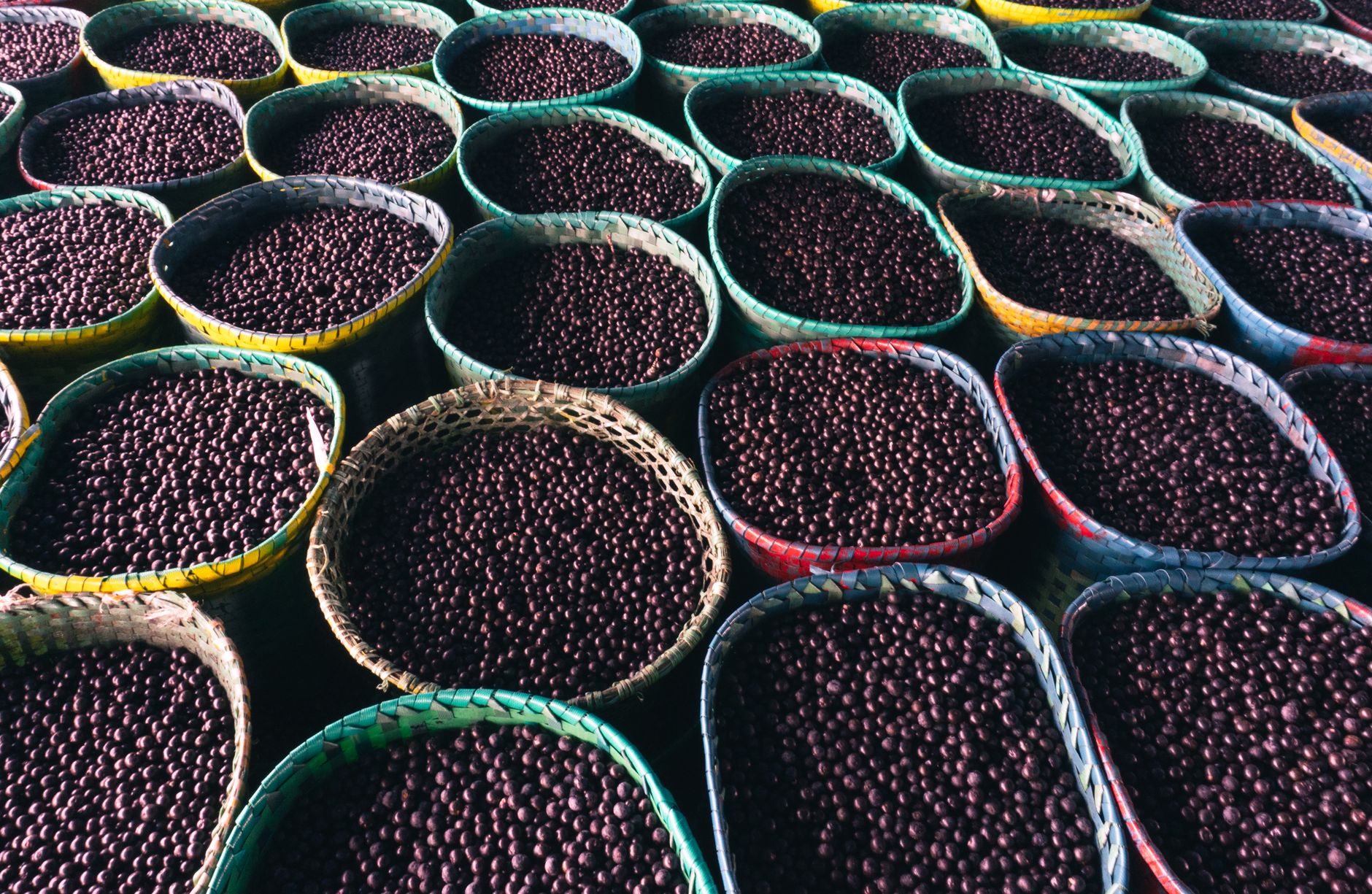
What açaí can teach conservation
Açaí offers a practical conservation lesson: standing forest can have economic value, but value alone does not protect every part of an ecosystem. The result depends on who controls the supply chain, how harvesting is managed, and whether other species remain part of the forest.
That is different from saying that every market product protects nature. It is also different from calling conservation a donation. The strongest argument is more grounded: when intact forest supports food, income, culture, and future options, clearing it becomes a more expensive decision.
Fund The Planet works with a different protection model in the Peruvian Amazon. Its focus is the legal acquisition and long-term protection of rainforest land, with the protected area and its location made visible through the .. Açaí does not prove that model by itself, but it does show why the question of forest value matters. Conservation is stronger when the forest is treated as a living place rather than as empty land waiting for a more profitable use.
The supply chain also has a physical side that is easy to miss. Fruit must be sorted, transported quickly, pulped, chilled, packaged, and moved through a market that may be far from the forest where it grew. Each stage changes who carries the cost and who controls the price. A product can reach consumers with a simple health label while the people and places behind it remain invisible.
The açaí palm is therefore more than a superfood story. It is a test of whether a global market can keep the people, species, and floodplain systems behind a product in view. The wider work of rainforest protection depends on the same attention to land, people, and long-term management.