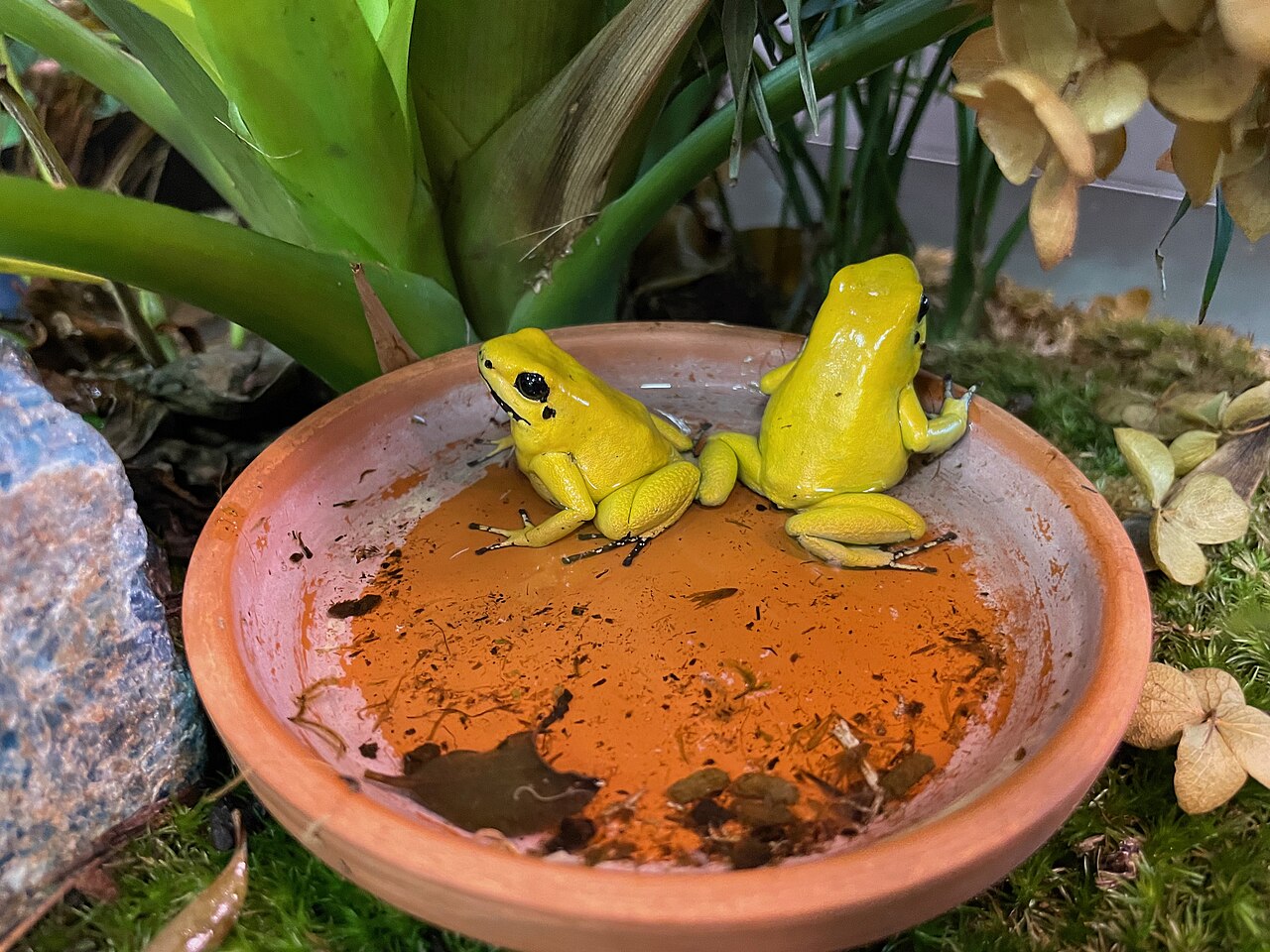
A golden poison frog can sit on a leaf and look almost unreal: bright yellow, barely longer than a paperclip, and powerful enough to make predators think twice. Its color is not decoration. It is a warning, shaped by evolution in the wet forests of Colombia’s Pacific lowlands.
Phyllobates terribilis:
The species, Phyllobates terribilis, is often described as one of the most toxic animals known to science. That claim is easy to turn into a headline, but the more interesting story is quieter. This tiny amphibian shows how rainforest life works at close range: chemistry, diet, habitat, culture, and conservation all meeting in one small body.
What makes the golden poison frog so unusual
Phyllobates terribilis is a poison dart frog from western Colombia, where humid lowland forest creates the warm, wet conditions it needs. AmphibiaWeb describes the species as tied to the Pacific coastal region of Colombia, not the Amazon Basin, which matters because conservation copy should not blur one rainforest region into another. It belongs to a wider family of brightly colored frogs, but its chemistry makes it stand apart.
Its skin contains batrachotoxin, a powerful alkaloid that can disrupt sodium channels in nerves and muscles. Research on batrachotoxin-bearing animals shows why the compound is so biologically important: it helps scientists understand how sodium channels work and how some animals avoid poisoning themselves. The safest way to write about this toxin is with care, because exact lethal-dose claims depend on route of exposure, body size, and experimental context.
One of the more remarkable questions about this frog is how it tolerates its own chemical weapon. Phyllobates terribilis carries enough batrachotoxin to stop the heart of a much larger animal, yet the frog itself is unaffected. The answer involves modified sodium channels. The frog has evolved changes in the molecular structure of its own sodium channels that make them insensitive to batrachotoxin binding. A single amino acid substitution at the right position is enough to turn a vulnerable channel into a resistant one. That evolutionary trick, worked out over millions of years in a small patch of Colombian forest, has also helped biomedical researchers understand the basic biology of electrical signaling in nerves and muscles.
In the wild, the frog’s color is part of an anti-predator strategy called aposematism. Bright yellow, orange, or green forms signal that the animal is not worth attacking. The warning only works because predators can learn to associate the color with a bad outcome, which turns a tiny frog into a very effective teacher.
Poison, not venom
One important detail often gets lost: the golden poison frog is poisonous, not venomous. Venom is injected through a bite, sting, or spine. Poison is harmful when touched, swallowed, or introduced through a cut or mucous membrane.
That distinction helps keep the description accurate without making the frog sound like an aggressive threat. Phyllobates terribilis does not chase danger. Its defense is passive, stored in the skin, and advertised by its color. For a predator, the best decision is simply to leave it alone.
Scientists believe poison dart frogs gain many of their skin alkaloids from their wild diet, although the exact pathway can differ between species. Captive poison frogs raised on non-toxic feeder insects often lose their toxicity, which shows how closely rainforest chemistry is connected to food webs. A frog like this is not just an isolated animal. It is a living trace of the insects, mites, beetles, and microhabitats around it.

A species shaped by forest, food, and culture
The golden poison frog is also culturally significant. The American Museum of Natural History notes that some Indigenous communities in Colombia have used toxins from dart-poison frogs on hunting darts, a practice that gave the group its common name. That history should be described respectfully and specifically, without turning living communities into a curiosity.
The frog’s ecological role is smaller and more subtle than the role of a jaguar or harpy eagle, but it still matters. Amphibians move energy through food webs, feed predators that can tolerate or avoid their defenses, and respond quickly to changes in moisture, temperature, and forest structure. When frogs disappear, the warning is often about more than frogs.
For readers who want the broader Amazon context, Fund The Planet’s article on poison dart frogs of the Amazon gives a wider look at color, diversity, and rainforest adaptation. This species profile has a narrower job: to explain why one Colombian frog became such a powerful example of rainforest chemistry.