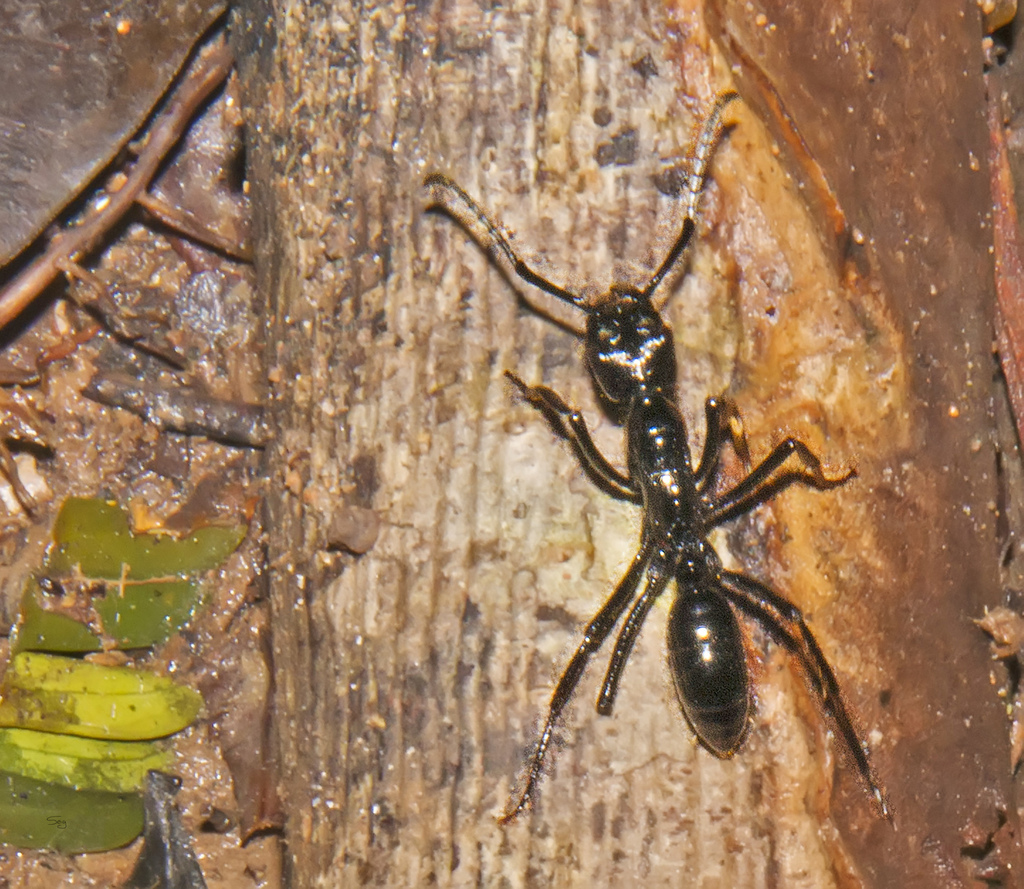
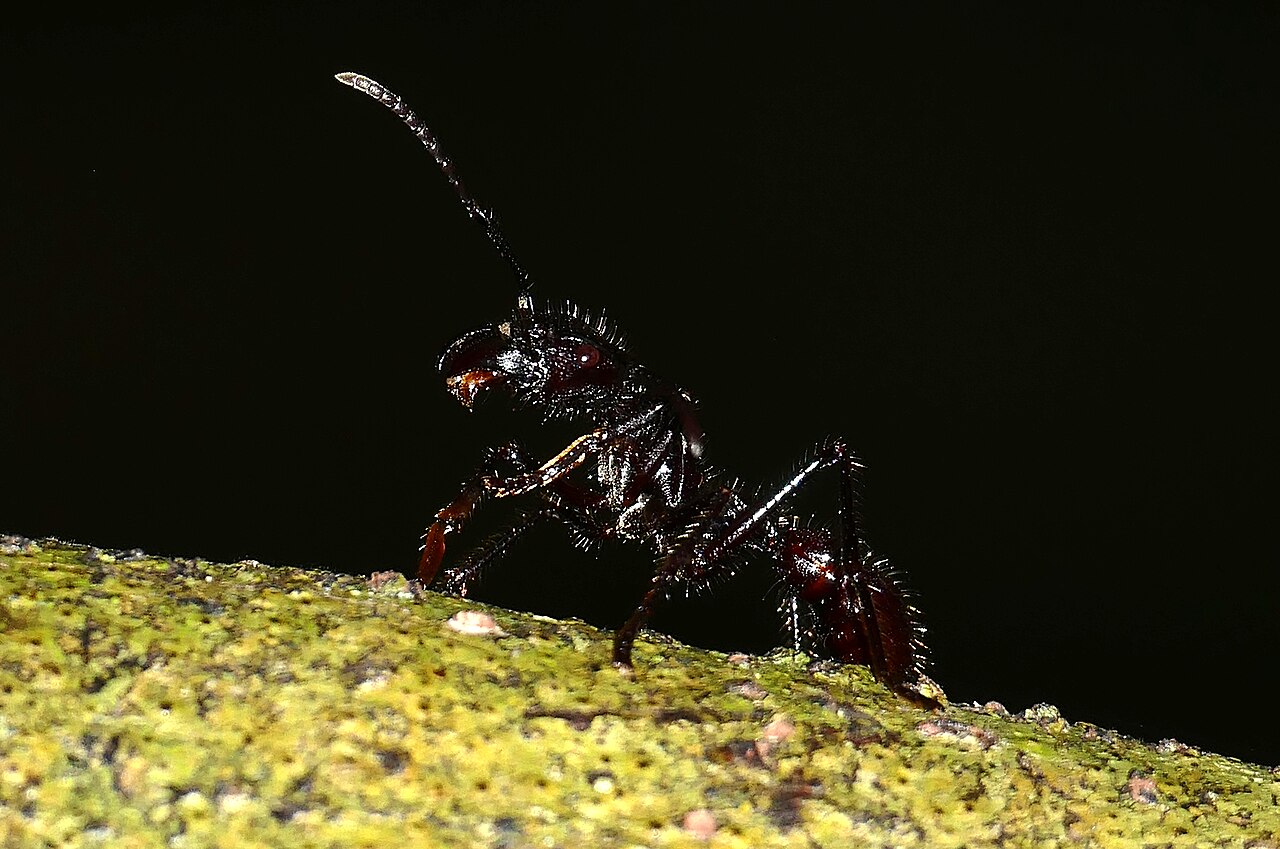
The first thing you notice is the size. The bullet ant (Paraponera clavata) is nearly an inch long, with a black glossy body and oversized mandibles that give it a look somewhere between wasp and ant, which is taxonomically accurate. But what makes this insect famous is not its appearance. It is the sting.
In 1983, an entomologist named Justin Schmidt published what would become one of the most cited pain indices in biology. He ranked insect stings on a scale of 1 to 4, drawing from personal experience with over 150 species. The bullet ant received a 4+. Schmidt described the sensation as “pure, intense, brilliant pain. Like walking over flaming charcoal with a three-inch nail embedded in your heel.” The pain arrives in waves, peaks after about 12 hours, and can take a full 24 hours to subside.
No other insect sting on Earth has received a higher rating. The name “bullet ant” comes from the common claim that the sting feels like being shot. Most people who have experienced both decline to confirm the comparison, but they do not usually argue against it either.
What Makes the Sting So Potent
The bullet ant’s venom contains poneratoxin, a neurotoxic peptide that disrupts sodium ion channels in nerve cells. The result is a sustained firing of pain signals that the body cannot easily shut off. Unlike a bee sting, which produces a sharp localized pain that fades within minutes, poneratoxin triggers a systemic reaction: muscle contractions, shaking, burning, and waves of pain that radiate far beyond the sting site.
The sting itself is delivered through a modified ovipositor at the tip of the abdomen, the same structure that in other insects evolved into the sting apparatus of wasps and bees. Bullet ants do not sting defensively in the casual way that a honeybee does. They are solitary foragers and tend to ignore humans unless their nest is disturbed. But when they do defend, they are not subtle. Workers will release an audible stridulation — a high-pitched squeaking sound produced by rubbing abdominal segments together — as a warning before attacking.
For most healthy adults, a bullet ant sting is extraordinarily painful but not medically dangerous. There is no known human fatality from the venom alone, though anaphylactic reactions are possible as with any insect venom. The real danger comes from disorientation. A person stung far from medical help, in a remote stretch of forest, could injure themselves while temporarily overcome.
The Ritual and the Ant
Among the Sateré-Mawé people of the Brazilian Amazon, bullet ants are central to one of the most demanding initiation ceremonies documented in anthropology. Young men undergoing the transition to warrior status must place their hands inside woven leaf gloves filled with dozens of bullet ants, stinger-side in, and endure the stings for ten minutes or more. The ritual is repeated multiple times over months or years. The hands swell, go numb, and can remain partially paralyzed for days.
Anthropologists and journalists who have witnessed the ritual describe participants as entering a dissociative state — trembling, sweating, but committed to stillness. The purpose is not to cause suffering but to demonstrate and build resilience. In Sateré-Mawé cosmology, the bullet ant is not a threat to be avoided but a teacher. The sting teaches the body something about endurance that cannot be learned any other way.
This cultural dimension complicates the simple image of the bullet ant as a horror-story insect. In the lowland Amazon, where daily life involves real threats from jaguars, snakes, and waterborne disease, the bullet ant occupies a more complex place: feared, respected, and in specific contexts, sought out.
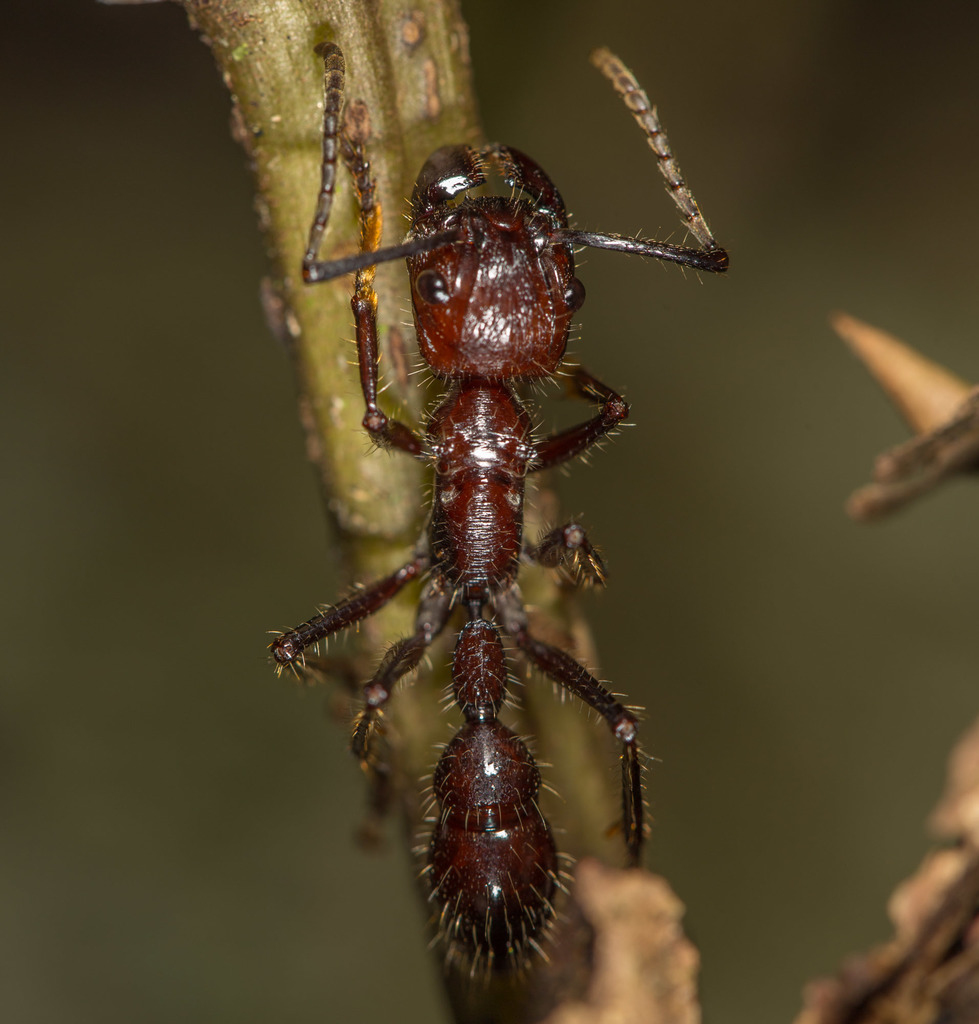
What the Bullet Ant Tells Us About the Forest
Like many of the Amazon’s most charismatic species, the bullet ant needs intact forest to survive. Colonies nest at the base of trees, and workers forage in the canopy and along the forest floor. Habitat fragmentation disrupts colony structure. A study in the Brazilian Atlantic Forest found that bullet ant populations declined sharply in forest fragments smaller than 100 hectares, likely due to changes in microclimate and reduced foraging range.
The bullet ant is also an indicator species. Its presence signals a functioning forest floor ecosystem with stable humidity, deep leaf litter, and connected canopy. When the forest is cleared or degraded, bullet ants disappear alongside countless less famous organisms. Protecting the Amazon is not only about saving the jaguar or the harpy eagle. It is about protecting the full web of life that makes those charismatic species possible, including the insects that most people would prefer never to meet.
The Amazon’s insect diversity is staggering, but it remains one of the least understood and least protected dimensions of biodiversity. Most conservation funding flows toward mammals and birds. Invertebrates, despite comprising the vast majority of animal species and performing essential ecological functions, receive a fraction of the attention. The bullet ant, precisely because of its fearsome reputation, has become one of the few Amazon insects that people know by name — much like the poison dart frog has become a recognizable face of rainforest amphibian diversity. That recognition carries an opportunity: a chance to understand that even the forest’s most intimidating residents depend on the same thing — intact habitat, protected from the saw and the fire.
The pain of the sting fades in a day. The silence that replaces the forest takes much longer to heal