
Picture the Earth 20,000 years ago. Not the world we know, oceans teeming, forests breathing, rivers threading through green continents, but something quieter and colder. Massive ice sheets have swallowed the northern hemisphere. The air is thin and dry. Landscapes that once hummed with life have turned to frozen scrubland. In most corners of the planet, the familiar pulse of tropical biodiversity has gone silent.
And yet, three small regions of the world stayed green.
These were the rainforest refugia: ancient biological sanctuaries that didn’t just survive one of the most extreme climate events in recent Earth history, they held onto the genetic blueprints for life on an entire planet. Understanding what they are, how they work, and why they still matter is one of the most important stories in modern conservation science. And it starts long before the ice age.
What Is a Rainforest Refugium?
A refugium (plural: refugia) is a geographic area where a species or ecosystem survives a period of unfavourable conditions such as a climate shifts, glaciations, prolonged droughts, while the surrounding landscape becomes inhospitable. Think of it as a natural shelter: a pocket of stability in a world that’s changing too fast for most life to adapt.
In the context of tropical rainforests, refugia are specific regions that maintained the warmth, moisture, and ecological complexity needed to support life through repeated global climate catastrophes. Not just any life; extraordinary concentrations of it. Species that evolved over millions of years of uninterrupted forest cover, species found nowhere else on Earth, species that would go on to repopulate entire continents once conditions improved.
The concept has deep scientific roots. Researchers piecing together fossil pollen records, cave mineral deposits, and modern genetic signatures have traced the lineages of today’s species back to these ancient safe zones. What they found is remarkable: a small number of places, separated by oceans and continents, independently developed the resilience to survive crises that wiped out ecosystems everywhere else.
Three of those places matter more than any others.
The Three Ancient Refugia
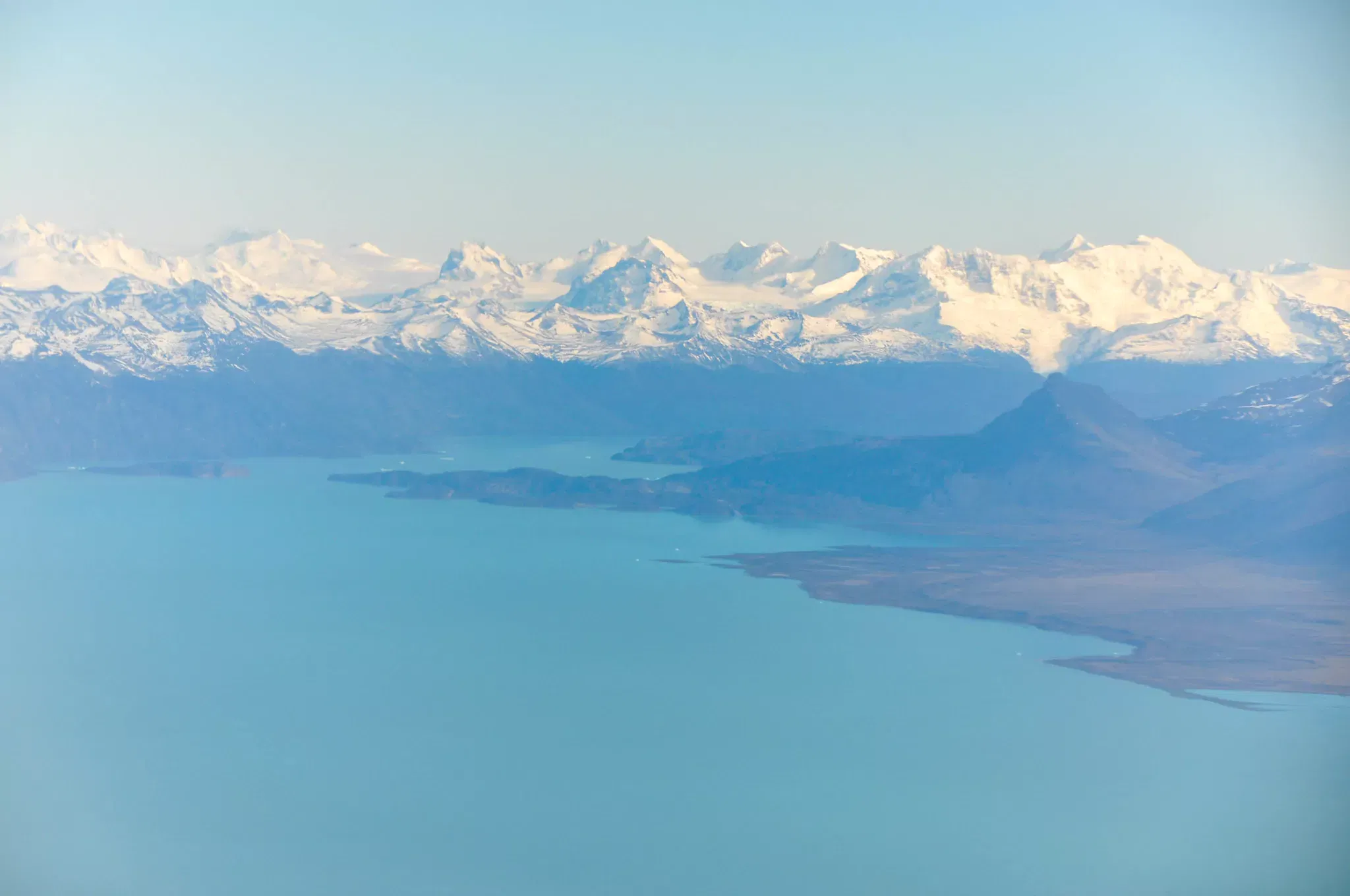
The Tropical Andes-Amazon Complex
There is no place on Earth with more species per square kilometre than the Tropical Andes. The numbers are almost difficult to believe: over 30,000 species of vascular plants, nearly 2,000 species of birds which is roughly a quarter of all bird species on Earth, and new species of frogs and insects still being discovered almost monthly in some areas.
The reason this region survived ice ages and thermal events that devastated everywhere else comes down to geography. When temperatures dropped by 5 to 6 degrees Celsius during the Last Glacial Maximum, something unusual happened here: the forests held. Research combining cave mineral records and paleoclimate models shows that moisture carried by Atlantic trade winds kept flowing inland throughout glacial cycles, maintaining precipitation levels close to modern norms. The mountains, rather than becoming barriers, became escape routes. A bird or an orchid facing the wrong temperature didn’t need to migrate thousands of kilometres; it simply moved a few hundred metres up or down the slope to find a more hospitable climate zone.
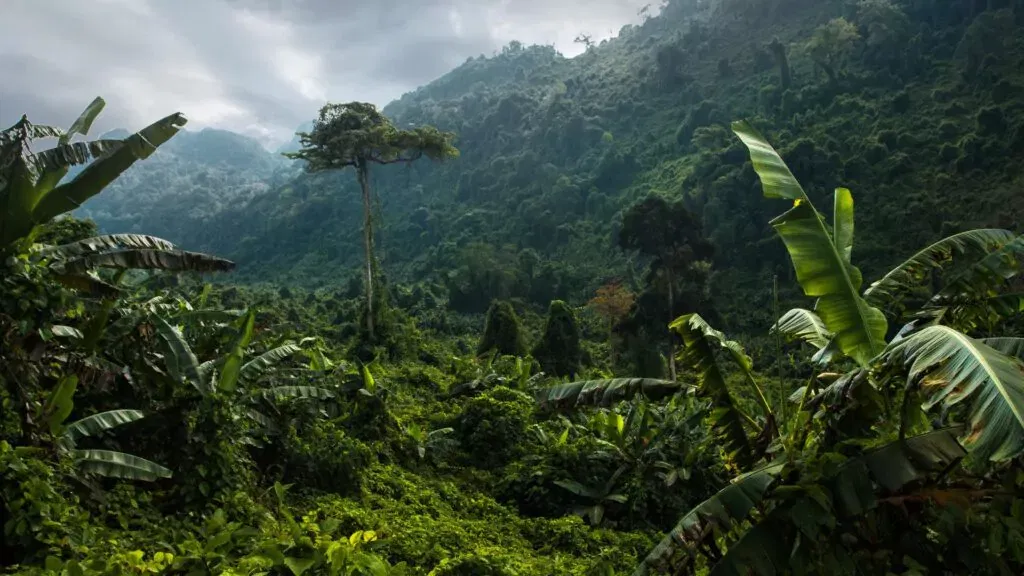
Scientists call this the elevation escape. It proved extraordinarily effective. The same mechanism that allowed species to survive the last ice age also drove speciation “the formation of new species” at rates found nowhere else. Each valley, each ridge, each isolated microhabitat became its own evolutionary laboratory. Over millions of years, this produced the highest concentration of endemic species on the planet: creatures that exist in this region and nowhere else.
The Andes-Amazon complex didn’t just survive one crisis. Paleoclimate records show it outlasted the Paleocene-Eocene Thermal Maximum around 56 million years ago, when global temperatures spiked by 5 to 6 degrees Celsius, and the mid-Cretaceous thermal maximum roughly 120 million years ago, when it was 9 to 12 degrees warmer than today. Its track record of survival stretches back over 120 million years.
Read more: Most Biodiverse Place on Earth: Why the Tropical Andes Leads the World
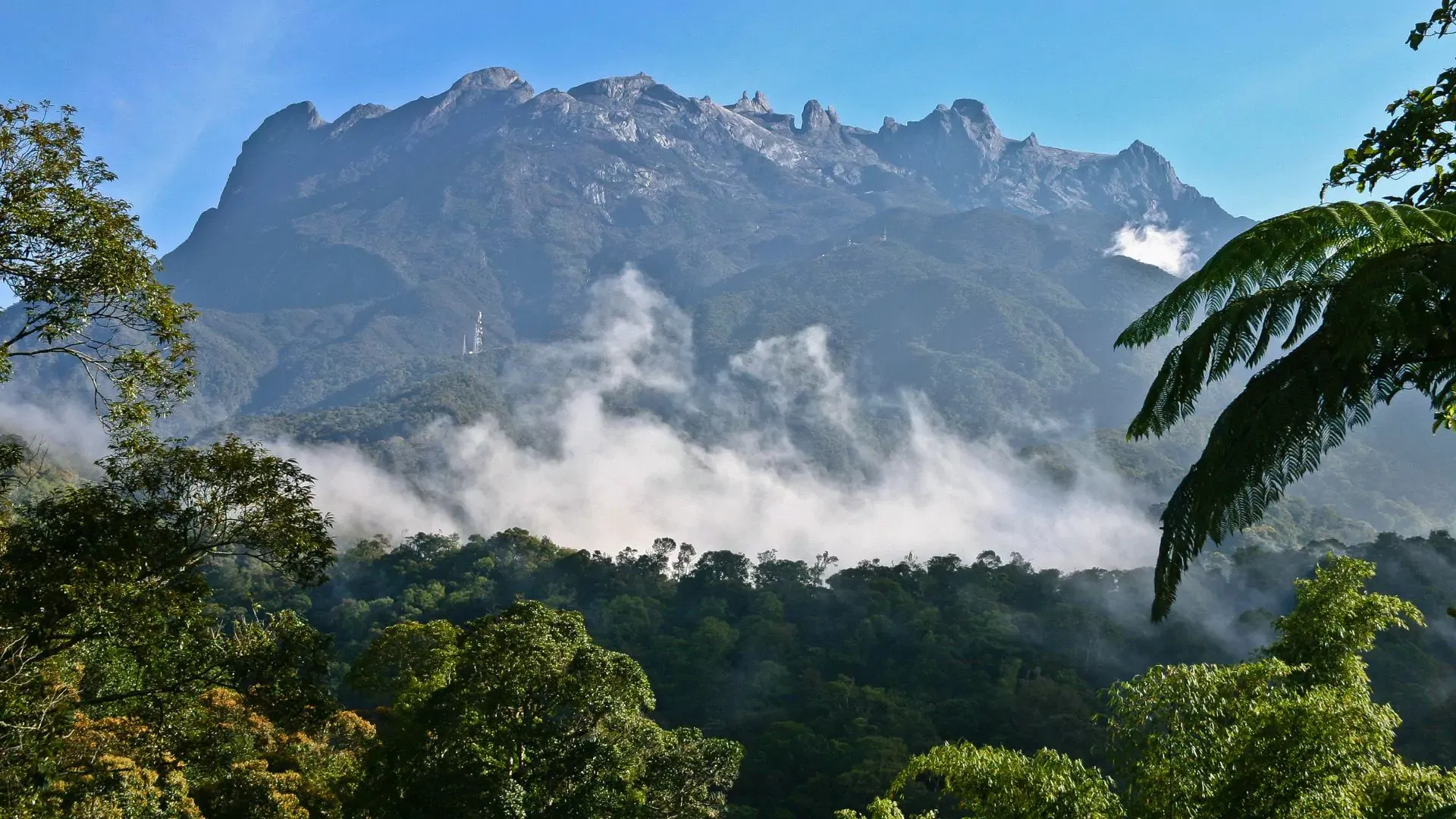
The Sundaland Forests of Borneo and Sumatra
Borneo and Sumatra tell a survival story that surprised even the scientists studying it. The conventional expectation was that these rainforests, like most others, would have fragmented into isolated pockets during ice ages. That is what happened almost everywhere in the tropics. But when researchers modelled the distribution of 317 species of dipterocarp trees across glacial and interglacial periods, they found the opposite. During the Last Glacial Maximum, as sea levels dropped by around 120 metres and exposed vast areas of continental shelf, the forests expanded. They marched across newly available land rather than retreating from it.
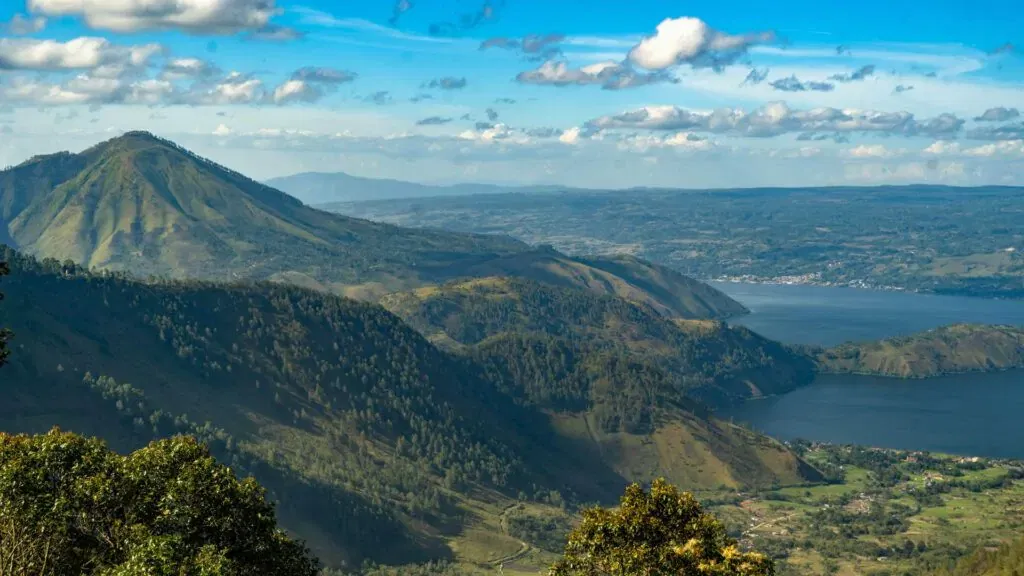
This happened because being positioned directly on the equator insulated the region from the temperature extremes that devastated higher-latitude forests. Northern Borneo in particular maintained dense forest cover while surrounding regions dried out, a fact confirmed through isotope analysis of ancient cave guano. The upland areas of both islands acted as stable refugia even during periods of maximum climate stress, and during warmer interglacial periods, populations spread outward across the region in what researchers describe as a species pump; a landscape-scale mechanism for generating and distributing biodiversity. These forests have been growing continuously for over 130 million years. They host more than 6% of all known species on Earth in an area that represents a fraction of global land cover.
Read more: Borneo Deforestation: What’s Being Destroyed and Why It Can’t Be Replaced
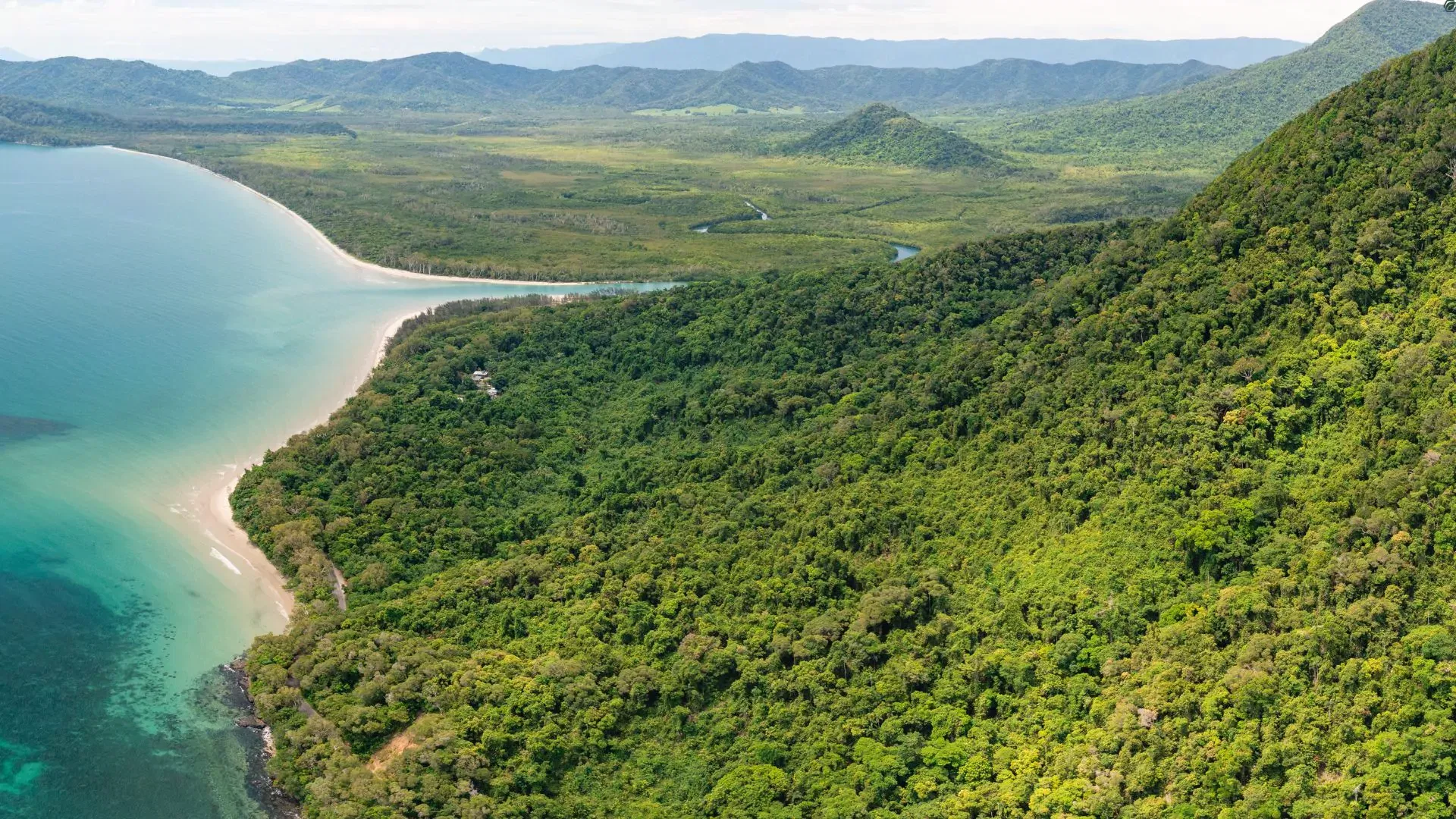
The Daintree Wet Tropics of Australia
In the far northeast of Australia, where the rainforest meets the reef, lies the oldest surviving tropical lowland forest on the planet. The Daintree has been here for approximately 180 million years. It predates the split of the southern supercontinent Gondwana. It sheltered life through the age of dinosaurs, through continental drift, through multiple ice ages, and through thermal events that reshaped the biology of the entire planet.
When the last ice age peaked, detailed climate modelling using neural networks identified three distinct pockets within the Wet Tropics bioregion where forest conditions remained stable while everything surrounding them transitioned to savanna. These weren’t tiny islands. They were concentrated zones of maximum climate resilience, and the species that sheltered in them responded by diversifying. The Daintree today holds plant families that trace their lineage directly to the Cretaceous period, and its concentration of endemic vertebrates corresponds directly to the locations of those ancient refugia.
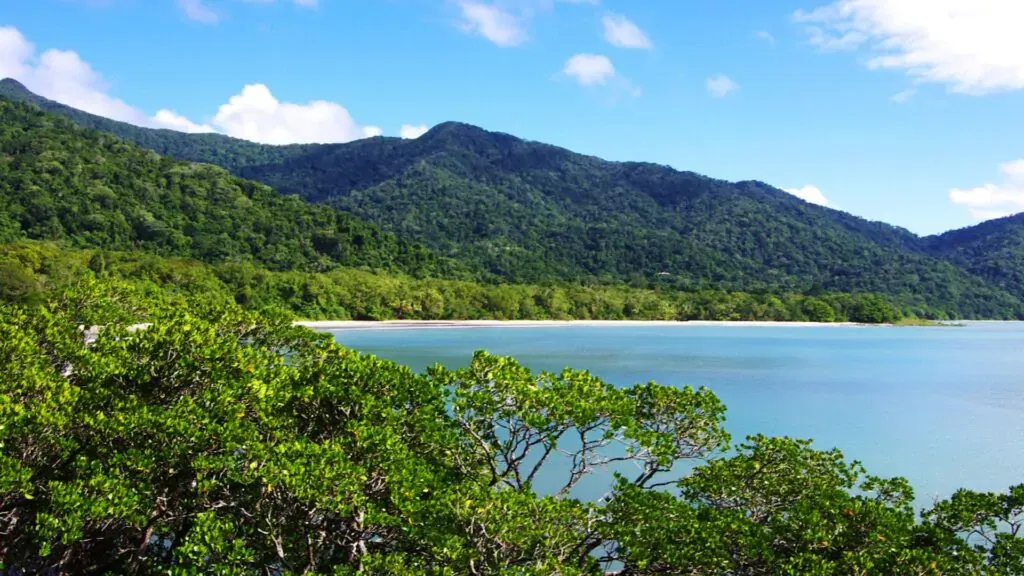
Unlike the Andes or Sundaland, the Daintree is geographically isolated. It couldn’t receive species from elsewhere or benefit from landscape connectivity during glacial maxima. It functioned as a closed evolutionary system: a self-contained refuge where life was refined, specialised, and eventually released outward in waves of recolonisation as the climate warmed.
Read more: Daintree Rainforest: The World’s Oldest Tropical Rainforest Explained
Why Refugia Matter: The Recolonisation Effect
Here is the part of this story that changes how you see every forest, every species, every ecosystem outside these three regions.
When the last ice age ended and the planet began to warm, the forests of North America, Europe, central Africa, and much of Asia didn’t simply bounce back on their own. Life doesn’t work that way. Ecosystems don’t regenerate from nothing. The biodiversity that re-established itself across vast regions of the planet spread outward from these refugia, carried by birds, wind, water, and slow ecological migration over thousands of years.
The seeds carried by birds from Andean peaks repopulated the Amazon basin. Ancient Daintree lineages rippled outward across the Australian continent. Sundaland populations marched across the newly exposed continental shelf and then settled into the genetic architecture of modern Southeast Asian ecosystems. Research modelling biodiversity patterns confirms this directly — the Tropical Andes functioned as a biological cradle, simultaneously generating new species and dispersing them outward to repopulate damaged regions.
These places weren’t just survivors. They were the engines of ecological recovery.
Read more: Which Rainforests Survived the Last Ice Age — And What Happened After
A Fraction of Land, An Outsized Role
The numbers here demand a pause. Combined, these three refugia cover roughly 0.1% of Earth. Three tenths of one percent. Within that fraction sits approximately 26% of the world’s bird species, 15.6% of known mammals, 14.4% of amphibians, and around 16% of all vascular plant species. The concentration of life relative to area is unlike anything else on the planet.
That ratio isn’t an accident. It’s the direct product of millions of years of uninterrupted ecological continuity. Species had time to specialise. Ecosystems had time to layer into complex interdependencies. Evolution, running at the faster metabolic rates that warm equatorial climates allow, had millions of additional generations to experiment. What accumulated in these places is irreplaceable — not because we value it sentimentally, but because the processes that created it cannot simply be restarted.
A plantation can grow trees. It cannot replicate 180 million years of evolutionary history. A reforestation project can restore cover. It cannot rebuild the genetic diversity of species that took millions of years and specific conditions to produce.
What These Refugia Are Facing Now
The same forests that survived the ice age are being cleared in hours.
Borneo has lost an estimated 92% of its original primary forest cover. Between 1973 and 2015, the island lost half its rainforest. Indonesia cleared around 264,000 hectares in 2024 alone, driven primarily by palm oil plantations and pulpwood operations. The Tropical Andes has lost roughly 75% of its original extent, with Bolivia, Peru, and Colombia collectively losing over a million hectares annually in recent years. Even the Daintree, protected by World Heritage status, faces climate-driven pressure as rainfall patterns shift and Queensland’s statewide clearing rates continue to rise.
The threat these forests face is different from an ice age. It’s faster, more targeted, and doesn’t leave behind the stable conditions that allowed refugia to function. Fragmented forests lose their refugia properties. Once the connectivity between elevation zones breaks down in the Andes, species can’t shift altitude to track changing temperatures. Once the upland cores of Borneo are cleared, the source populations for regional recolonisation disappear. The forests that kept the planet’s biological diversity intact for millions of years are facing pressure that moves faster than any glacier.
The Logic of Protecting the 0.1%
There is a compelling mathematical reality buried in this science. A fraction of Earth’s land has repeatedly rescued the planet’s biodiversity. The same fraction is now at risk. Protecting it, even partially, has a multiplier effect that far exceeds what protecting an equivalent area anywhere else on Earth would achieve.
This isn’t abstract conservation theory. Scientists who study refugia describe them using the language of source populations and recolonisation centres precisely because that’s what they are: functional systems with the capacity to replenish surrounding regions if conditions allow. Every hectare of intact refugia forest that remains is a hectare of that capacity preserved.
People are already drawing that line. In the Ucayali region of Peru, right at the meeting point of the high Andes and the deep Amazon, communities are protecting primary forest that has stood since long before the last ice age ended. In the uplands of Borneo, conservation networks are working to maintain the corridors that let life move and adapt. In the Daintree, land acquisition is removing areas from development permanently.
None of it is enough on its own. But the science of refugia tells us something important about where effort matters most: in the places that have always been the source.
Understanding Refugia Changes the Conversation
Most people think about conservation in terms of beautiful landscapes, charismatic species, or the vague moral weight of protecting something irreplaceable. Those things matter. But refugia science adds another dimension: utility. These forests are Earth’s biological infrastructure. They are the places from which recovery has always come. Losing them doesn’t just mean losing species in the present — it means compromising the planet’s ability to recover from whatever climate shifts come next.
The question isn’t whether we can afford to protect them. The question is whether we understand what we’re losing if we don’t.
Rainforest refugia survived the ice ages. They’ve outlasted temperature swings, mass extinctions, and geological upheaval across timescales that make human history look like a footnote. What they cannot survive is the combination of rapid habitat loss and a warming climate that removes the stable conditions they depend on.
The three forests that kept life alive for millions of years still exist. Barely diminished in places, heavily pressured in others, but still there. Still functioning as the genetic libraries, the recolonisation centres, the biological save points they have always been. That’s worth understanding. And once you understand it, it becomes difficult to think about them the same way again.
Sources
- Baker, P.A., Fritz, S.C., Battisti, D.S., et al. (2020). Beyond Refugia: New Insights on Quaternary Climate Variation and the Evolution of Biotic Diversity in Tropical South America. Neotropical Diversification: Patterns and Processes, Springer. https://doi.org/10.1007/978-3-030-31167-4_3
- Jaramillo, C., et al. (2010). Effects of rapid global warming at the Paleocene-Eocene boundary on Neotropical vegetation. Science, 330(6006): 957-961. https://doi.org/10.1126/science.1194585
- Raes, N., Cannon, C.H., Hijmans, R.J., et al. (2014). Historical distribution of Sundaland’s Dipterocarp rainforests at Quaternary glacial maxima. PNAS, 111(47): 16790-16795. https://doi.org/10.1073/pnas.1403053111
- Wurster, C.M., Bird, M.I., Bull, I.D., et al. (2010). Forest contraction in north equatorial Southeast Asia during the Last Glacial Period. PNAS, 107(35): 15508-15511. https://doi.org/10.1073/pnas.1005507107
- Salles, T., et al. (2021). Quaternary landscape dynamics boosted species dispersal across Southeast Asia. Communications Earth and Environment, 2: 240. https://doi.org/10.1038/s43247-021-00311-7
- Hilbert, D.W., Graham, A., and Hopkins, M.S. (2007). Glacial and interglacial refugia within a long-term rainforest refugium: The Wet Tropics Bioregion of NE Queensland, Australia. Palaeogeography, Palaeoclimatology, Palaeoecology, 251(1): 104-118. https://doi.org/10.1016/j.palaeo.2007.02.020
- Graham, C.H., Moritz, C., and Williams, S.E. (2006). Habitat history improves prediction of biodiversity in rainforest fauna. PNAS, 103(3): 632-636. https://doi.org/10.1073/pnas.0505754103
- Rangel, T.F., Edwards, N.R., Holden, P.B., et al. (2018). Modeling the ecology and evolution of biodiversity: Biogeographical cradles, museums, and graves. Science, 361(6399): eaar5452. https://doi.org/10.1126/science.aar5452